
We Deliver Directly To Your Door
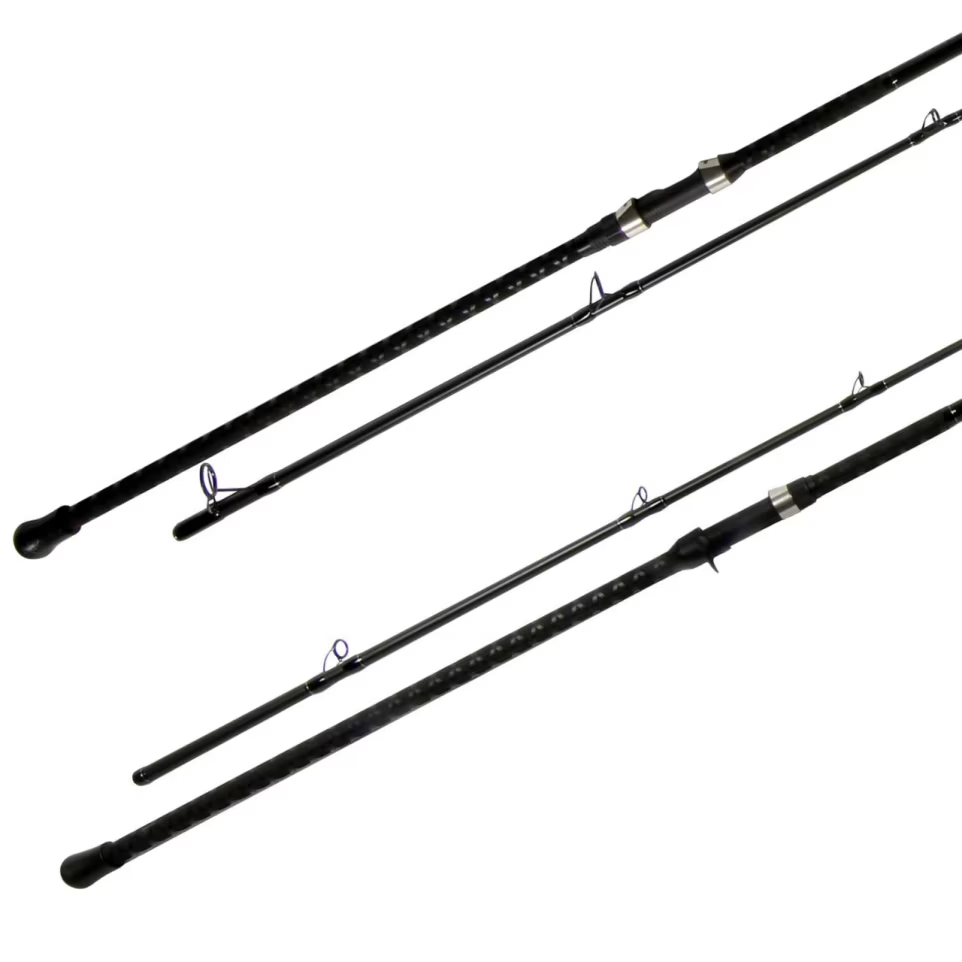
SHIMANO SPEEDMASTER SURF CASTING ROD
€137.96 – €146.58Price range: €137.96 through €146.58
Description
SHIMANO SPEEDMASTER SURF CASTING ROD
Built for Confident Surf Casting
Long casts are often determined by much more than raw power. Balance, loading response, control, recovery, and overall handling can all influence how effectively a surf rod can be used. With the SHIMANO SPEEDMASTER SURF CASTING ROD, a purpose-driven platform is presented for anglers who want dependable performance while targeting fish from beaches, shorelines, jetties, and other saltwater environments.
A well-designed surf rod is expected to handle demanding conditions. At the same time, it should remain comfortable enough to be used through long sessions. For that reason, attention has been given to the relationship between strength, responsiveness, casting control, and practical usability.
Whether heavy sinkers are being launched toward distant structure or lighter presentations are being worked along the shoreline, a capable rod can make the entire experience more controlled. Consequently, the right combination of components and construction can help anglers concentrate on reading the water instead of fighting their equipment.
A Purpose-Built Surf Fishing Platform
Surf fishing is often performed in conditions where equipment is exposed to considerable demands. Salt spray, sand, strong currents, wind, heavy terminal tackle, and powerful fish can all place additional stress on a setup.
Because of this, a dedicated surf rod is preferred by many anglers over a general-purpose fishing rod.
The Speedmaster platform has been developed with that demanding environment in mind. Furthermore, the design is intended to provide a useful balance between casting performance and fighting capability.
Rather than being designed around a single fishing situation, the rod can be incorporated into a variety of shore-based approaches. Depending on the configuration selected, it can be used for different lure, bait, line, and sinker applications.
Why Surf Rod Design Matters
Casting Distance and Control
Distance can be particularly important when fishing from shore.
Fish are not always positioned directly in front of the angler. Instead, feeding activity may occur beyond the first break, around deeper channels, near sandbars, or close to offshore structure. Therefore, additional casting distance can provide access to productive water that might otherwise remain unreachable.
However, distance alone is not enough.
Accuracy must also be considered. A cast that travels far but lands outside the desired area may provide little practical advantage. As a result, a surf rod needs to offer both loading potential and directional control.
The blank’s response can influence how energy is transferred during a cast. When the rod is loaded correctly, energy can be stored before being released through the forward casting motion.
This process can help create a smoother and more controlled presentation.
Strength When It Matters
Surf fishing can involve powerful fish.
Depending on the location and target species, anglers may encounter striped bass, redfish, drum, snook, tarpon, sharks, rays, pompano, or other hard-fighting species. Consequently, equipment is often expected to withstand sudden runs and sustained pressure.
Strength is therefore an important part of surf-rod selection.
At the same time, excessive stiffness is not always desirable. A rod that is too rigid may provide less forgiveness during a fight. Conversely, a properly balanced blank can provide useful power while allowing controlled pressure to be maintained.
The overall design should therefore be viewed as a combination of casting performance, lifting power, sensitivity, and fish-fighting control.
Designed for the Shoreline Angler
Comfortable Handling
Surf sessions can last for several hours.
During that time, a rod may be held, repositioned, cast, rested, and retrieved repeatedly. Therefore, overall handling becomes increasingly important as the session continues.
A well-balanced setup can reduce unnecessary fatigue. In addition, appropriate grip design can provide a more secure connection between the angler and the rod.
This becomes particularly useful when the environment is wet or windy.
Instead of focusing only on maximum strength, the complete fishing experience should be considered. Balance, grip comfort, reel compatibility, casting mechanics, and overall weight can all influence how enjoyable a rod feels throughout the day.
Built for Different Fishing Approaches
Surf fishing does not follow a single formula.
Some anglers prefer bait fishing with sinkers and natural presentations. Others focus on artificial lures, metals, plugs, soft plastics, or specialized surf techniques.
Because fishing styles vary, versatility is valuable.
The rod can be incorporated into different shore-based setups depending on the selected model specifications and the application being pursued. As a result, anglers can choose the configuration that best corresponds with their preferred target species, tackle weight, and local conditions.
Key Product Highlights
- Purpose-designed surf fishing platform
- Suitable for demanding shoreline applications
- Casting performance is supported by responsive blank construction
- Power is provided for handling strong saltwater fish
- Designed to work with appropriate surf-fishing reels
- Suitable for a range of bait and lure techniques
- Practical choice for beach and shore anglers
- Built with saltwater-oriented fishing applications in mind
- Comfort and handling are considered alongside performance
- Useful for anglers seeking dependable long-casting equipment
Casting Performance From the Beach
Making the Most of Every Cast
A successful surf cast begins before the rod is moved forward.
Line management, sinker selection, reel setup, stance, timing, and release point can all affect the final result. Therefore, even a high-quality rod should be matched with suitable tackle and proper technique.
The blank plays an important role in this process.
During the loading phase, energy is transferred into the rod. As the cast progresses, that stored energy is released. When timing and technique are matched correctly, a smoother transfer can be achieved.
This is especially useful when longer casts are required.
Distance Without Losing Control
Long-range casting should not be treated as a competition for maximum distance.
Instead, practical casting distance should be considered. The ideal cast is one that reaches productive water while remaining controlled and repeatable.
For example, an angler may need to repeatedly place a bait beyond a breaking wave. In another situation, a lure may need to be presented around a specific trough or channel.
Consequently, repeatability can be just as valuable as maximum range.
A properly matched surf rod can help provide the foundation for consistent casting mechanics.
Saltwater Fishing Applications
Beaches and Open Shorelines
Open beaches are among the most common environments for surf fishing.
However, conditions can change quickly. Wind direction, wave height, tide movement, current, and water clarity may all influence where fish are located.
Because the angler is often standing away from the feeding zone, a capable rod becomes an important part of the overall system.
The right setup can allow bait or lures to be positioned beyond the strongest part of the surf.
Jetties and Rockier Shorelines
Surf-style equipment can also be useful around certain jetties and rocky shoreline environments.
In these locations, additional control may be required because fish can attempt to move toward structure immediately after being hooked.
Accordingly, the rod should be matched carefully to the local environment and target species.
Line strength, leader selection, reel drag, terminal tackle, and angler technique should all be considered together.
Saltwater Species
A versatile surf setup may be used for numerous species.
Depending on regional regulations and local fish populations, potential targets can include:
- Striped bass
- Redfish
- Black drum
- Snook
- Tarpon
- Pompano
- Bluefish
- Spanish mackerel
- Sharks
- Rays
- Surfperch
- Other coastal gamefish
The exact application will depend on the rod model, line rating, lure or sinker weight, reel, and local fishing conditions.
Matching the Rod With the Right Reel
Spinning Reel Compatibility
A surf rod should be paired with a reel that complements its intended application.
A properly matched spinning reel can provide suitable line capacity, drag performance, and retrieval speed. Furthermore, the reel’s weight should complement the rod’s balance.
An oversized reel may make a setup unnecessarily heavy. On the other hand, a reel with insufficient capacity or drag capability may limit the effectiveness of the overall system.
For that reason, the complete combination should be evaluated rather than choosing the rod independently.
Line Selection
Line choice can significantly affect casting and fish-fighting performance.
Braided line is commonly selected for its combination of strength and relatively thin diameter. Monofilament may also be preferred for certain applications because of its stretch and handling characteristics.
Fluorocarbon is frequently used as a leader material where abrasion resistance and reduced visibility are desired.
The best combination will depend on the target species and fishing environment.
Terminal Tackle Considerations
Sinkers and Bait Rigs
When bait is being used, sinker selection becomes particularly important.
A sinker must be heavy enough to reach the intended area and maintain position against current and waves. However, excessive weight can negatively affect casting mechanics and place unnecessary demands on the equipment.
Therefore, the appropriate weight should always be selected according to the rod’s published specifications.
Artificial Lures
Artificial lures can also be used in surf environments.
Plugs, metals, spoons, soft plastics, and other presentations can be selected according to species and conditions.
A responsive blank can make repeated lure casting more manageable while also helping the angler maintain control during retrieves.
Built for Anglers Who Demand More
The SHIMANO SPEEDMASTER SURF CASTING ROD is positioned as an option for anglers who want their shore-fishing equipment to perform beyond casual applications.
It is not simply about making a longer cast.
Instead, performance is created through the combination of casting mechanics, blank response, strength, balance, component selection, and proper tackle matching.
Furthermore, the equipment should remain practical enough to be used repeatedly throughout a fishing season.
Performance Meets Practicality
A surf rod needs to be capable without becoming unnecessarily complicated.
For everyday anglers, weekend fishermen, dedicated surf specialists, and experienced saltwater enthusiasts alike, straightforward equipment can often be more valuable than equipment that is difficult to manage.
The design philosophy behind a performance-oriented surf rod is therefore centered around useful functionality.
Casting should feel controlled.
Retrieval should remain comfortable.
Hooksets should be confidently delivered.
During a fight, pressure should be manageable.
And throughout the session, the equipment should inspire confidence.
Choosing the Appropriate Model
Different fishing situations require different specifications.
Before purchasing, anglers should carefully review the exact model’s:
- Length
- Power
- Action
- Recommended lure weight
- Recommended line rating
- Number of pieces
- Handle configuration
- Guide specifications
- Reel compatibility
- Intended fishing application
These specifications should always be compared with the fishing conditions in which the rod will be used.
Consider Your Target Species
A rod intended for smaller coastal species may not be suitable for large gamefish.
Likewise, a setup designed for heavy bait rigs may not provide the ideal experience for lightweight lure fishing.
Therefore, the target species should be considered first.
Next, the typical casting weight should be evaluated.
Finally, the local environment should be taken into account.
This approach makes it easier to select a configuration that provides useful performance without unnecessary compromises.
Why Anglers Choose Dedicated Surf Equipment
Greater Casting Potential
A dedicated surf rod is generally designed around the unique demands of shoreline fishing.
Longer blanks can provide useful casting leverage, while suitable actions can support controlled loading. Depending on the model, additional length may also help keep line above breaking waves during certain presentations.
Improved Tackle Management
Surf fishing often requires heavier terminal tackle than many freshwater techniques.
Consequently, equipment needs to be capable of handling the associated loads.
A dedicated platform can provide the structural support required for those applications while still allowing the angler to maintain control.
Better Fish-Fighting Confidence
Confidence matters when a strong fish is hooked.
An angler who trusts their equipment can concentrate more effectively on drag management, positioning, and fish control.
That confidence can become especially valuable when fishing around structure or strong currents.
Care and Maintenance
Rinse After Saltwater Use
Saltwater can be harsh on fishing equipment.
After a saltwater session, the rod should be rinsed appropriately with fresh water. A gentle rinse is generally preferred over high-pressure spraying, which can force contaminants into sensitive areas.
The rod should then be allowed to dry completely before being stored.
Inspect the Guides
Guides should be checked regularly.
Sand, salt, and debris can accumulate around guide frames and inserts. Therefore, visual inspection should be performed periodically.
If unusual damage is observed, the component should be assessed before the next fishing session.
Store Properly
Storage conditions can also affect equipment longevity.
The rod should be kept in a dry location away from unnecessary heat, moisture, and physical impact.
When transporting a multi-piece rod, the sections should be protected against unnecessary bending or impact.
A Reliable Addition to a Surf-Fishing Setup
From long beach sessions to demanding saltwater applications, a purpose-built casting rod can provide an important foundation for the complete fishing system.
The value is found not only in distance.
Instead, it is found in the combination of casting control, strength, handling, versatility, and confidence.
For anglers looking to refine their shore-based equipment, the SHIMANO SPEEDMASTER SURF CASTING ROD can be considered alongside the rest of the tackle system to create a setup suited to their preferred fishing style.
Product Benefits at a Glance
Casting Performance
- Designed for surf-oriented casting applications
- Useful for reaching water beyond the immediate shoreline
- Supports controlled and repeatable casting
Fish-Fighting Capability
- Built around demanding saltwater applications
- Provides useful power for handling strong fish
- Suitable for appropriately matched lines and reels
Versatility
- Can be used with selected bait rigs
- Suitable for various artificial-lure approaches
- Adaptable to different shoreline environments
Angler Comfort
- Designed with practical handling in mind
- Can be matched with a suitable reel for balanced use
- Appropriate for extended fishing sessions
Saltwater Applications
- Beaches
- Surf zones
- Shorelines
- Selected jetties
- Coastal fishing areas
Final Buying Consideration
The ideal surf setup is determined by more than the rod alone. Reel size, line type, leader strength, terminal tackle, casting weight, target species, and local conditions should all be considered before a final selection is made.
For anglers seeking a dedicated platform for serious shore fishing, this Shimano offering provides a strong foundation around which a complete surf setup can be developed.
SHIMANO SPEEDMASTER SURF CASTING ROD
Advanced Performance for Demanding Coastal Conditions
Along the shoreline, every cast can present a different challenge. Wind direction may shift, waves can increase unexpectedly, and feeding fish may move from one section of the beach to another. Because of these variables, dependable equipment is particularly valuable for anglers who spend significant time pursuing fish from land.
The Speedmaster range has been positioned for anglers who expect a combination of casting performance, practical handling, and dependable power. Rather than being designed around a single fishing scenario, the platform can be incorporated into several surf-oriented techniques when the appropriate model is selected.
Moreover, the rod can become an important part of a balanced system that includes a suitable reel, line, leader, terminal tackle, and lure or bait presentation.
Designed Around the Demands of Surf Fishing
Managing Wind and Wave Conditions
Wind is one of the most influential variables encountered during coastal fishing.
A strong headwind can make casting considerably more difficult. Crosswinds can affect lure trajectory and line management. Meanwhile, offshore wind may create different conditions across the same beach.
Therefore, equipment must be selected with the surrounding environment in mind.
A suitable surf rod can provide the leverage required to generate controlled casting power. At the same time, good technique remains essential because no rod can completely eliminate the effects of unfavorable weather.
When the rod, reel, line, and terminal tackle are properly matched, however, a more predictable casting experience can be achieved.
Working Beyond the Breaking Waves
Fish are frequently found in areas that are not immediately accessible from dry sand.
Channels, troughs, sandbars, drop-offs, and current seams may create productive feeding zones. Consequently, being able to place a presentation beyond the first line of breaking water can provide an important advantage.
Longer surf-oriented equipment can help create the leverage needed for this style of fishing.
Nevertheless, casting distance should always be balanced with accuracy. A presentation that lands precisely in productive water can be more valuable than one that simply travels farther.
Blank Response and Casting Mechanics
Energy Storage During the Cast
Casting performance is influenced by how the blank responds to loading.
As the rod is accelerated, the blank bends and stores energy. During the forward portion of the cast, that energy can be released to help propel the terminal tackle.
For this reason, casting technique should be adapted to the rod’s action and power.
A smooth acceleration is generally more useful than an uncontrolled effort. In addition, proper timing can help the angler make better use of the blank’s natural loading characteristics.
Consistency Over Maximum Distance
Experienced surf anglers often understand that consistency is extremely valuable.
A cast that can be repeated accurately throughout a long session may provide greater practical value than an occasional maximum-distance cast.
Consequently, the equipment should support controlled mechanics.
Once the angler becomes familiar with the rod’s response, casting rhythm can be refined. Over time, this familiarity can help improve confidence and presentation accuracy.
Comfortable Performance Throughout Long Sessions
Ergonomic Handling
Surf fishing can require hundreds of casts during a single outing.
Repeated movement can place considerable demands on the hands, arms, shoulders, and back. Therefore, the overall balance of the rod and reel should be taken seriously.
A balanced setup can feel easier to control.
Furthermore, appropriate grip placement can make it easier to maintain a consistent casting motion without excessive strain.
The exact experience will depend on the selected model, reel, line, and individual casting style. Nevertheless, proper equipment matching remains one of the simplest ways to improve long-session comfort.
Controlling the Rod During a Fight
Once a fish is hooked, the purpose of the rod changes.
During the cast, leverage and loading are important. During the fight, controlled pressure and shock management become more significant.
A properly selected blank can help the angler maintain pressure while allowing the fish to move against a controlled drag system.
Additionally, rod angle can be adjusted throughout the fight to influence how pressure is applied.
The angler should always remain aware of the rod’s specifications and avoid exceeding its recommended limits.
Matching Power With Fishing Conditions
Light Coastal Applications
Some coastal environments are better suited to lighter tackle.
Smaller species, lighter lures, and calmer surf may not require the same level of power as heavy-duty bait fishing.
In those circumstances, a more responsive configuration can provide an enjoyable balance between casting ability and fish-fighting feedback.
The exact model should therefore be chosen according to the intended application.
Heavier Surf Presentations
Other environments demand considerably more from the equipment.
Strong currents may require heavier sinkers. Larger bait presentations may also be used when targeting powerful species. In addition, rough surf can create extra pressure on the terminal tackle.
For these applications, appropriate rod power becomes increasingly important.
However, heavier does not automatically mean better.
An oversized setup can reduce casting comfort and may provide less enjoyment when smaller fish are being pursued. As a result, matching the equipment to the intended application is always recommended.
Lure Fishing From the Surf
Metal Lures
Metal lures are popular among many saltwater anglers because they can be cast considerable distances.
They may be retrieved quickly through open water, worked around bait schools, or presented at different depths.
A responsive rod can assist with repeated casting and lure control.
Moreover, the correct rod length and power can help anglers maintain control when a fast-moving fish strikes.
Plugs and Hard Baits
Surface plugs and diving hard baits can also be effective in suitable coastal environments.
These presentations may be used around visible bait activity, structure, current seams, and areas where predatory fish are expected to feed.
A balanced setup allows the lure to be cast efficiently while providing enough control during retrieval.
Soft Plastics
Soft plastics provide another flexible option.
Depending on the presentation, they can be rigged with jig heads, weighted hooks, or other suitable terminal components.
Because these lures are available in many sizes and profiles, the rod should be selected according to the intended weight range rather than simply the lure’s physical dimensions.
Bait Fishing Applications
Natural Bait Presentations
Natural bait remains an important part of surf fishing.
Shrimp, squid, cut bait, shellfish, and other regionally appropriate offerings may be used depending on local regulations and target species.
A dedicated surf setup can provide the casting leverage needed to position these presentations beyond the immediate breakers.
Once the bait has been placed, the rod can be positioned appropriately while the angler monitors the line for activity.
Bottom Fishing
Bottom-oriented presentations are frequently used from beaches and coastal structures.
The objective is generally to keep the bait close to the bottom while allowing current and water movement to create a natural presentation.
Sinker choice becomes particularly important in this situation.
Too little weight may cause the rig to move excessively. Too much weight, however, can reduce casting efficiency and may exceed equipment specifications.
Accordingly, the terminal setup should always remain within the manufacturer’s recommended range.
Understanding Action and Power
What Rod Action Means
Rod action describes where much of the blank’s bending occurs under load.
A faster action generally concentrates more of the bend toward the upper section. A more moderate response can distribute bending farther down the blank.
Each approach provides different characteristics.
Fast actions can offer responsive hooksets and precise lure control. More moderate actions can provide useful loading characteristics and may feel smoother during certain casting motions.
The ideal choice depends on technique and fishing conditions.
Understanding Rod Power
Power refers to the amount of force required to load the rod.
Light, medium, medium-heavy, heavy, and extra-heavy classifications are commonly used across the fishing industry.
However, ratings should not be interpreted in isolation.
Different manufacturers may have different approaches to classification. Therefore, the published specifications for the specific model should always be consulted before choosing terminal tackle.
Reel and Line Balance
Creating a Balanced Combination
The rod represents only one part of the fishing system.
A reel that is too heavy can affect the overall balance. Conversely, a reel that is too small may not provide sufficient line capacity or drag performance for the intended application.
Therefore, the reel should be selected after considering the rod’s length, power, target species, and expected casting weight.
Braided Main Line
Braided line can be advantageous when long-distance casting is important.
Its relatively thin diameter can help reduce resistance during the cast. High strength-to-diameter characteristics can also be useful when significant line capacity is required.
Nevertheless, braid should be selected according to the complete system.
Leader construction, knot quality, drag settings, and target species should all be considered.
Monofilament Options
Monofilament continues to be useful in many saltwater applications.
Its stretch can provide a degree of forgiveness during aggressive strikes and sudden runs. In addition, it can be relatively straightforward to handle and tie.
For some anglers, monofilament may also be preferred for specific bait-fishing approaches.
Ultimately, line selection should reflect the technique rather than following a one-size-fits-all recommendation.
Leader Selection
Abrasion Resistance
Coastal environments can expose fishing line to sand, rocks, shells, pilings, and other abrasive surfaces.
Therefore, leader material can be particularly important when fish are expected to make contact with structure.
Fluorocarbon and heavier monofilament leaders are commonly considered for these situations.
The leader should be matched to the target species and local conditions.
Knot Strength
Even strong line can fail when poorly connected.
For this reason, knots should be tied carefully and inspected before fishing.
The connection between the main line and leader should be tested appropriately before serious casting begins.
A clean connection can also reduce interference as the line passes through the guides.
Fishing Different Parts of the Beach
Reading the Water
Successful surf fishing is often based on observation.
The surface may reveal areas where waves break differently. Changes in water color can indicate depth variations. Foam lines can sometimes reveal current movement. Birds and bait activity may also provide valuable clues.
Consequently, anglers should spend time studying the shoreline before making repeated casts.
Equipment can help deliver the presentation, but locating productive water remains a key part of the process.
Finding Troughs
Troughs can be particularly interesting areas for surf anglers.
These deeper sections between sandbars may provide traveling routes for fish. During certain tidal conditions, food can also be concentrated around these areas.
A longer casting setup can help place bait or lures into these zones.
However, conditions vary considerably between beaches, so observations should be made during each session.
Fishing Around Sandbars
Sandbars influence wave behavior and current flow.
A bar can cause waves to break earlier, while deeper water beyond it may create another feeding area.
Instead of casting blindly, anglers can use wave patterns to estimate where deeper water may be located.
With practice, this process can become one of the most valuable skills in surf fishing.
Tide and Current Considerations
Fishing the Moving Tide
Tidal movement can affect fish behavior.
As water begins moving across shallow areas, baitfish and other food sources may become more active. Predatory fish can respond to these movements.
Therefore, certain stages of the tide may be more productive than others.
A capable surf setup allows anglers to adjust their presentation as conditions change.
Strong Current Conditions
Heavy current can make lightweight terminal tackle difficult to control.
In these situations, additional sinker weight may be required.
However, the weight must remain appropriate for the selected equipment.
Before increasing the terminal load, the rod’s published specifications should be checked carefully.
Durability and Everyday Use
Designed for Regular Fishing
Fishing equipment should not only perform during ideal conditions.
It should also remain practical when conditions are less predictable.
Saltwater exposure, transportation, repeated casting, and frequent assembly can all contribute to normal wear.
Proper maintenance can therefore play a significant role in extending equipment life.
Transporting a Surf Rod
Long rods can be more difficult to transport than shorter fishing equipment.
Multi-piece configurations can offer greater convenience where applicable. During transportation, rod sections should be secured so that unnecessary movement and impact are avoided.
The guides should also be protected from contact with hard surfaces.
Building a Complete Surf Setup
Rod
The rod provides the primary casting and fish-fighting platform.
Its length, power, and action should be matched to the intended application.
Reel
The reel should provide appropriate line capacity, drag performance, and balance.
A properly matched reel can make the entire combination more comfortable to use.
Main Line
The main line should correspond with the target species, casting requirements, and expected environmental conditions.
Leader
Leader material should be selected according to abrasion risk, fish behavior, and presentation requirements.
Terminal Tackle
Hooks, swivels, clips, sinkers, and lure components should all be selected according to the intended technique.
Accessories
A complete surf-fishing setup may also include:
- Sand spikes
- Tackle bags
- Fishing pliers
- Line cutters
- Measuring tools
- Headlamps
- Fish grips
- Rod sleeves
- Spare leaders
- Extra terminal tackle
- Sun protection
- Appropriate footwear
Together, these components can make a fishing session considerably more efficient.
Confidence on Every Cast
Confidence is difficult to measure, yet it can have a significant influence on fishing performance.
When equipment feels dependable, anglers can focus more attention on the environment, presentation, and fish.
Instead of constantly questioning whether the setup can handle the task, attention can be placed where it belongs: on the water.
That is particularly valuable during demanding surf sessions.
An Investment in Better Shore Fishing
Purchasing specialized fishing equipment should be viewed as an investment in performance and usability.
The right rod can be used across countless fishing sessions. It can accompany anglers during early-morning beach trips, evening tides, weekend adventures, and extended coastal expeditions.
Furthermore, equipment that is appropriately matched to a fishing style can make the experience more enjoyable.
For anglers who regularly fish from shore, a dedicated surf platform can therefore represent a meaningful upgrade over general-purpose tackle.
Who Is This Rod For?
Dedicated Surf Anglers
Those who frequently fish beaches and open coastlines can benefit from equipment specifically developed around surf applications.
Weekend Anglers
Occasional anglers can also benefit from a capable setup when their preferred fishing environment involves beaches or coastal shorelines.
Saltwater Enthusiasts
Anglers who regularly pursue coastal species may appreciate having specialized equipment available for longer casts and demanding conditions.
Experienced Fishermen and Women
Experienced anglers can take advantage of the rod’s role within a carefully matched system.
At the same time, newer anglers can develop their casting and surf-fishing skills around equipment that is designed for the environment.
Making the Most of Your Purchase
Once the rod has been selected, time should be spent learning how it responds.
Begin with manageable casting weights.
Practice smooth loading rather than maximum-force casting.
Then gradually refine casting speed, release timing, stance, and grip.
With repetition, the rod’s natural response can become easier to understand.
This learning process can ultimately produce more consistent casts and greater confidence.
Final Perspective
Coastal fishing rewards preparation.
The tide must be considered. Weather needs to be watched. Productive water has to be located. Terminal tackle must be selected carefully. Above all, the equipment should be appropriate for the environment.
The SHIMANO SPEEDMASTER SURF CASTING ROD can serve as a central component within that preparation, offering a platform designed around the demands associated with surf-oriented fishing.
Its greatest value is not represented by a single specification.
Instead, it is found in the relationship between casting performance, handling, power, tackle compatibility, and practical usability.
For anglers who want to spend more time concentrating on the water and less time worrying about whether their equipment is suited to the task, choosing a properly matched surf setup can be an important step toward a more confident fishing experience.
Product Selection Checklist
Before ordering, verify:
- Rod length: Select according to casting distance and fishing environment.
- Power: Match the expected fish size and terminal tackle.
- Action: Consider your preferred casting and presentation style.
- Lure/sinker range: Remain within the published specification.
- Line rating: Match the main line to the intended application.
- Reel size: Select a reel that balances effectively with the rod.
- Target species: Consider the fish most commonly pursued.
- Fishing location: Account for beach, jetty, rocks, current, and surf conditions.
- Storage: Ensure suitable transportation and storage are available.
- Maintenance: Rinse and inspect the equipment after saltwater use.
Ready for the Next Session?
A productive day on the shoreline begins with preparation.
With suitable tackle, thoughtful rig selection, and a rod matched to the intended fishing conditions, each cast can be made with greater purpose.
Whether the goal is to reach distant structure, work artificial lures through active water, or place bait beyond the breakers, the right equipment can make the process more enjoyable.
Choose your preferred configuration, match it with the appropriate reel and terminal tackle, and prepare for your next coastal adventure.
Additional information
| MODEL/LENGTH | SPMC100MH2 — 10'0", SPMC120MH2 — 12'0" |
|---|
Related Products
Related products
-
SHIMANO TEREZ BW SWORDFISH ROD
€450.75Select options This product has multiple variants. The options may be chosen on the product page -
SHIMANO TEREZ BW ROLLER STRIPPER UNI BUTT ROD
€494.09 – €606.78Price range: €494.09 through €606.78Select options This product has multiple variants. The options may be chosen on the product page -
SHIMANO INTENZA CASTING A ROD
€156.02Select options This product has multiple variants. The options may be chosen on the product page
Reviews
There are no reviews yet.