
We Deliver Directly To Your Door


Description
SHIMANO TALAVERA TYPE J SPINNING ROD
Built for Purposeful Jigging Performance
When demanding saltwater conditions are encountered, dependable tackle is often required. For anglers who are targeting powerful fish with vertical and aggressive jigging techniques, a purpose-built rod can provide an important advantage. The SHIMANO TALAVERA TYPE J SPINNING ROD has been designed around the demands of jigging, where controlled lure movement, reliable hook-setting power, and consistent fish-fighting performance are valued.
Rather than being treated as a general-purpose freshwater rod, this series is positioned for anglers who want equipment suited to saltwater jigging applications. Consequently, greater attention can be placed on power, control, durability, and handling. Whether offshore structure is being explored or productive water columns are being worked, a dedicated jigging setup can make the overall fishing experience more efficient.
Furthermore, the Talavera platform has been developed with Shimano’s extensive experience in fishing tackle behind it. As a result, anglers can be equipped with a rod intended to complement modern spinning reels, braided main lines, leaders, and metal jigs.
A Dedicated Approach to Vertical Jigging
Vertical jigging requires more than simply dropping a lure and retrieving it. Throughout the presentation, precise rod movements can be used to influence the action of the jig. At the same time, sufficient lifting power may be required when a strong fish is hooked.
For this reason, rod balance becomes particularly important.
A well-suited jigging rod can help reduce unnecessary movement while allowing the lure to be manipulated efficiently. Moreover, the blank needs to provide enough responsiveness for productive lure control while retaining the strength needed during a prolonged fight.
The Talavera Type J concept is therefore centered on this balance between lure presentation and fish-fighting capability.
Designed Around the Angler
Different fishing environments can place very different demands on equipment. Deep water, current, structure, heavy jigs, and powerful saltwater species can all increase the workload placed on a rod.
Accordingly, a specialized jigging rod can be selected when conventional spinning equipment would not provide the desired level of control.
With an appropriate reel and line combination, this rod can be incorporated into a complete offshore system where every component is selected for a specific purpose.
Jig Control Where It Matters
A jig is only as effective as its presentation allows.
During a vertical presentation, subtle changes in rod movement can affect how the lure rises, falls, darts, or pauses. Therefore, the angler’s ability to communicate movement through the rod is important.
A responsive blank can make those movements easier to interpret and repeat. In addition, the rod can provide useful feedback when the lure contacts structure, changes direction, or encounters resistance in the water.
This connection between angler, rod, line, and lure can be especially valuable when fish are holding at specific depths.
Saltwater Fishing Performance
Saltwater environments can be unforgiving. Exposure to spray, moisture, current, abrasive structure, and repeated high-load fights can place considerable demands on fishing equipment.
Because of this, saltwater tackle should be selected with the intended application in mind.
The Talavera Type J family is associated with jigging applications where strength and control are important considerations. Furthermore, its spinning configuration allows it to be paired with a wide range of spinning reels and braided-line systems.
That versatility can be useful for anglers who want to build a dedicated setup without moving away from familiar spinning tackle.
Offshore Applications
Offshore fishing can involve rapidly changing conditions.
One moment, a jig may be worked through relatively open water. Shortly afterward, a hooked fish may attempt to move toward structure. Consequently, the rod must be capable of supporting both lure presentation and fish control.
Depending on the selected model and matching tackle, the setup can be used for a variety of vertical jigging situations.
These may include:
- Vertical metal jig presentations
- Offshore reef fishing
- Structure-oriented jigging
- Boat-based saltwater fishing
- Targeting powerful game fish
- Deep-water lure presentations
- Current-heavy jigging environments
- Active-water-column searching
Why Purpose-Built Jigging Equipment Matters
A common mistake is assuming that any strong spinning rod can perform the same role as a dedicated jigging rod.
In practice, rod design involves numerous considerations.
The blank profile, action, power distribution, grip configuration, guide system, overall balance, and intended lure range can all influence performance. Therefore, a rod designed around jigging can provide characteristics that are difficult to reproduce with a generic all-purpose model.
For anglers who regularly fish offshore, that distinction can become increasingly noticeable.
Power and Control
Power is particularly important when large fish are targeted.
However, raw strength alone does not define a successful jigging rod. Instead, usable power must be combined with controllable movement and practical handling.
During the retrieve, the rod should allow the angler to work the lure without excessive effort. Once a strike occurs, the same equipment should provide support as pressure is applied.
This combination is one of the reasons dedicated jigging rods remain popular among serious saltwater anglers.
Pairing the Rod With a Spinning Reel
A spinning rod is only one part of a complete fishing system.
Consequently, reel selection should be considered alongside rod selection. A suitable spinning reel can complement the rod by providing appropriate line capacity, drag performance, gearing, and overall balance.
Braided line is commonly used in jigging because its low stretch can provide direct communication between the lure and angler. In addition, a suitable leader can be incorporated when abrasion resistance or presentation considerations require it.
Building a Balanced Setup
A balanced combination can generally be approached by considering several factors:
- Rod power
- Rod action
- Jig weight
- Target species
- Fishing depth
- Current strength
- Braided-line strength
- Leader selection
- Reel size
- Expected fight duration
Rather than selecting every component independently, the complete system should be considered as one unit.
That approach can improve comfort while also helping the tackle perform more predictably.
Metal Jigging Applications
Metal jigs are highly adaptable saltwater lures.
They can be dropped vertically, retrieved through different portions of the water column, or manipulated with deliberate rod movements. Depending on the jig design, speed, depth, and target species, multiple presentations can be explored during a single outing.
For that reason, a jigging rod needs to support a broad range of movements.
A controlled lift can be followed by a fall. A fast retrieve can then be introduced. Alternatively, a slower cadence may be used when fish are less active.
The rod serves as the connection between the angler’s movements and the lure.
Searching Different Depths
One of the major benefits of vertical jigging is the ability to explore different depths efficiently.
Once productive water has been located, the lure can repeatedly be presented within that zone. As a result, time can be spent fishing rather than covering large horizontal distances.
This approach can be especially effective around reefs, drop-offs, pinnacles, channels, and other offshore features.
Handling During Extended Sessions
Comfort becomes increasingly important during long fishing sessions.
Repeated jigging movements can place strain on the wrists, forearms, shoulders, and back. Therefore, appropriate equipment selection can contribute to a more manageable experience.
Rod length, grip configuration, reel position, overall weight, and balance should all be considered.
When these factors work together, the angler can maintain a consistent presentation for longer periods.
Practical Ergonomics
Good fishing equipment should not only be strong.
It should also be manageable.
A rod that is excessively heavy or poorly balanced can become tiring when repeated movements are required. Conversely, equipment that feels controlled and predictable can make the process more comfortable.
For this reason, anglers should consider how the complete rod-and-reel combination feels in hand rather than evaluating the rod in isolation.
Built for Anglers With Different Experience Levels
Jigging can be enjoyed by experienced offshore anglers as well as those developing their saltwater techniques.
For experienced users, a dedicated jigging rod can provide a platform for refined lure presentations and demanding fights.
Meanwhile, anglers who are still developing their technique can benefit from equipment that has been designed specifically around the movements required by jigging.
With practice, cadence, rod positioning, lure speed, and hook-setting technique can all be refined.
Developing Better Jigging Technique
Effective jigging is often based on consistency.
Instead of relying entirely on random movements, anglers can experiment with controlled patterns. A sequence may involve lifting the rod, allowing the jig to fall, retrieving line, and repeating the movement.
Different fish may respond to different tempos.
Therefore, the ability to adjust presentation can become an important part of the overall strategy.
The rod helps make those adjustments possible.
Designed for the Demands of Saltwater
Saltwater fishing presents unique challenges.
Equipment can be exposed to salt deposits, spray, humidity, and repeated contact with wet surfaces. Additionally, powerful fish can generate substantial loads during a fight.
As a result, maintenance should always be treated as part of responsible tackle ownership.
After saltwater use, appropriate rinsing and drying practices should be followed according to the manufacturer’s recommendations. Reel components, connections, guides, and other exposed areas should also be inspected regularly.
Proper care can help fishing equipment remain dependable across many outings.
A Strong Choice for Dedicated Offshore Tackle Systems
The value of a specialized rod becomes particularly clear when it is matched with the right supporting equipment.
A suitable spinning reel, quality braided line, reliable leader material, strong terminal tackle, and appropriately sized jig can all contribute to a more complete setup.
Furthermore, matching the tackle to the target species can help prevent unnecessary compromises.
For example, equipment intended for smaller inshore species may not be appropriate for powerful offshore fish. Likewise, extremely heavy tackle may reduce the enjoyment of lighter jigging applications.
Therefore, model selection should always be based on the intended fishing conditions.
Product Highlights
The following characteristics can make this series appealing to anglers searching for dedicated jigging equipment:
- Purpose-oriented spinning design for jigging applications
- Suitable platform for offshore saltwater fishing
- Designed for controlled metal-jig presentations
- Built around the demands of vertical lure work
- Compatible with modern spinning-reel setups
- Well suited to braided-line systems
- Useful for structure and open-water applications
- Designed with fish-fighting performance in mind
- Suitable for anglers seeking specialized saltwater tackle
- Available in model configurations intended for different applications
Choosing the Appropriate Model
Because jigging conditions vary considerably, model selection should not be based solely on rod appearance.
Instead, the intended lure weight, target species, fishing depth, line strength, and expected fighting conditions should be considered first.
A lighter setup may be appropriate when smaller jigs and moderate species are being targeted. In contrast, heavier applications may require greater power and stronger supporting tackle.
Therefore, anglers are encouraged to review the specifications of the individual model before purchasing.
Consider Your Target Species
Species behavior can influence tackle requirements.
Some fish make powerful initial runs. Others use structure to their advantage. Certain species may fight deep in the water column, while others rapidly change direction once hooked.
Because of these differences, the selected rod should provide an appropriate combination of control and power.
Consider Your Jig Weight
Jig weight is another major consideration.
A rod should be selected according to the manufacturer’s recommended lure range rather than simply choosing the strongest option available.
Using a suitable jig within the intended range can allow the rod to load and recover as designed.
Moreover, appropriate lure matching can improve presentation and reduce unnecessary fatigue.
A Purposeful Addition to a Saltwater Tackle Collection
For anglers building an offshore arsenal, specialized rods can fill important roles.
Rather than forcing one rod to cover every fishing technique, dedicated equipment can be assigned to specific applications. Consequently, a jigging rod can remain rigged and ready whenever conditions favor vertical presentations.
This approach can also make preparation easier.
Instead of repeatedly changing reels, leaders, and lures, an angler can maintain several purpose-built combinations.
The result can be a more organized and efficient fishing setup.
Confidence on the Water
Confidence is often influenced by equipment.
When anglers know their tackle has been selected for the conditions being faced, greater attention can be placed on reading the water, locating fish, and refining lure presentation.
That is particularly important during offshore trips, where opportunities can be limited and preparation matters.
The right rod does not guarantee a catch. However, it can provide a more appropriate platform for executing the techniques required by the situation.
Final Product Perspective
The SHIMANO TALAVERA TYPE J SPINNING ROD has been positioned as a dedicated option for anglers who want a purpose-driven approach to saltwater jigging. Its spinning format, jigging-focused design philosophy, and compatibility with modern offshore tackle make it an appealing choice for anglers building specialized setups.
More importantly, the rod can be viewed as part of a complete system.
When matched with an appropriately sized spinning reel, braided line, leader, and jig, a balanced setup can be created for demanding saltwater environments.
Whether productive structure is being explored, deep water is being searched, or metal jigs are being worked through an active water column, specialized equipment can make the process more controlled and enjoyable.
For anglers seeking dependable tackle for serious jigging applications, the Talavera Type J platform deserves consideration as part of a carefully matched offshore fishing system.
Detailed Features and Performance
Fast Action for Aggressive Jig Presentation
At the heart of this jigging platform, a Fast action has been provided across the listed spinning models. Shimano describes the Type J design as being intended for a typical speed-jigging tempo, with the blank loading and unloading quickly so that an aggressive flick can be imparted to the jig.
This characteristic can be particularly useful when an active presentation is required.
Instead of relying exclusively on slow movements, the jig can be worked with quicker lifts and deliberate changes in cadence. As a result, a lively presentation can be maintained while the lure is moved through the water column.
Furthermore, the faster loading behavior distinguishes this family from Shimano’s Type Slow J rods. The Slow J models are designed around a slower, more methodical presentation, whereas the Type J design is intended to load more quickly and pitch the jig more aggressively.
What Fast Action Means for Jigging
Fast action generally indicates that a greater portion of the rod’s working bend is concentrated toward the upper section.
For jigging, that behavior can be useful because quick rod movements can be transferred efficiently into lure movement. Therefore, anglers can experiment with sharper lifts, faster cadence changes, and more aggressive presentations.
At the same time, the appropriate model should always be selected according to the intended jig weight, target species, line system, and fishing conditions.
Model Powers From Light to Medium Heavy
A broad power range has been offered within the spinning lineup.
Shimano lists Light, Medium Light, Medium, and Medium Heavy models, allowing different levels of tackle to be matched with different fishing situations.
This range can be valuable because offshore jigging is not limited to one type of fish.
Smaller reef species may be approached with lighter tackle. Meanwhile, larger pelagic or structure-oriented targets may require considerably more lifting capability.
Light Power
The Light version can be considered when a more moderate presentation is desired.
Because lighter equipment can make smaller or lighter jigs more engaging to work, it may be selected when the expected fish size and conditions allow it.
However, lighter tackle should not be pushed beyond its intended application.
Medium Light Power
Medium Light can provide an intermediate option.
For anglers who want more authority than a Light model while retaining a relatively responsive setup, this power category may provide an appealing balance.
Consequently, it can be considered for situations where moderate-sized fish and active jig presentations are expected.
Medium Power
A Medium model provides another step toward increased fish-fighting capability.
For general-purpose jigging within the series, this power can be attractive when a balanced combination of lure control and strength is preferred.
Medium Heavy Power
Medium Heavy represents the upper end of the currently listed spinning power range.
When stronger fish, heavier tackle, or more demanding conditions are expected, the additional power can become valuable.
Nevertheless, tackle should always be matched to the manufacturer’s recommendations and the actual conditions being faced.
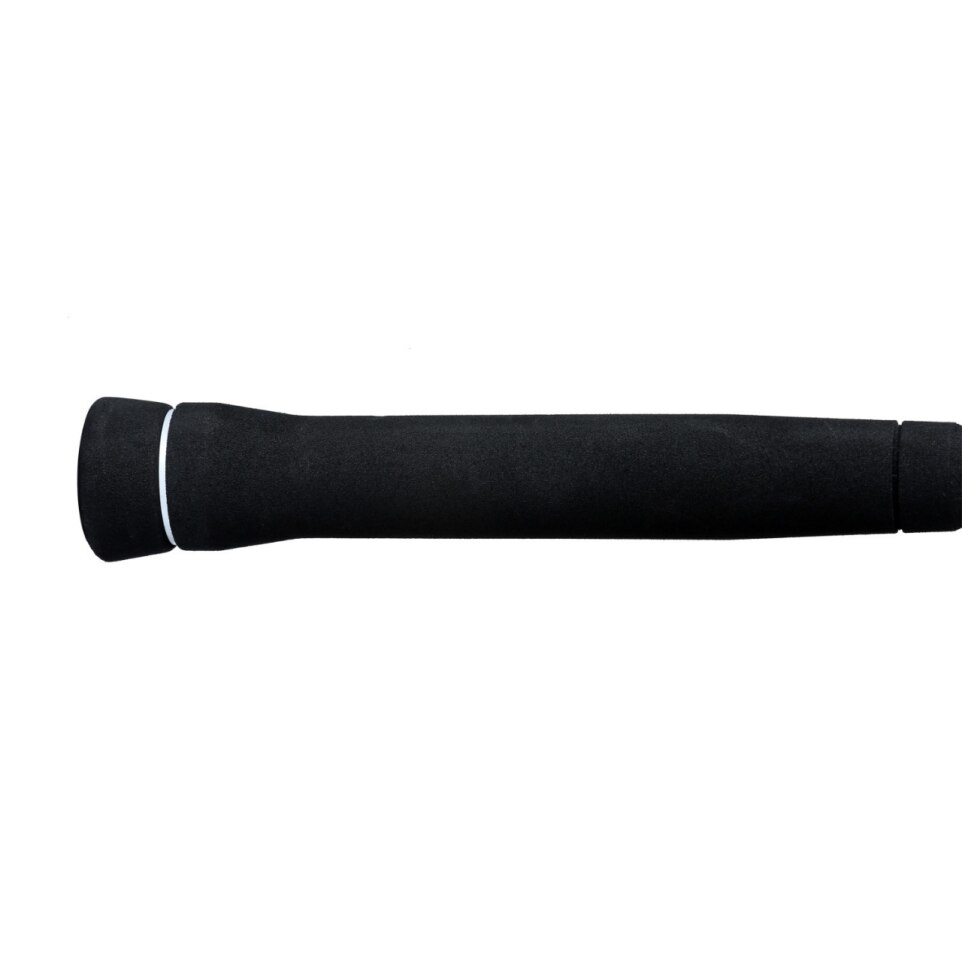
High Density EVA Grip Construction
Comfort becomes especially important during repetitive jigging.
The spinning models are listed with High Density EVA grips.
EVA can provide a durable and practical contact surface for anglers who spend extended periods working a lure.
Why Grip Material Matters
During vertical jigging, the rod can be moved repeatedly throughout an entire session.
Therefore, the handle should provide a secure point of contact while remaining comfortable enough for repeated use.
A properly matched grip can also help maintain control when pressure is applied during a fish fight.
Moreover, EVA is well suited to environments where moisture is frequently encountered.
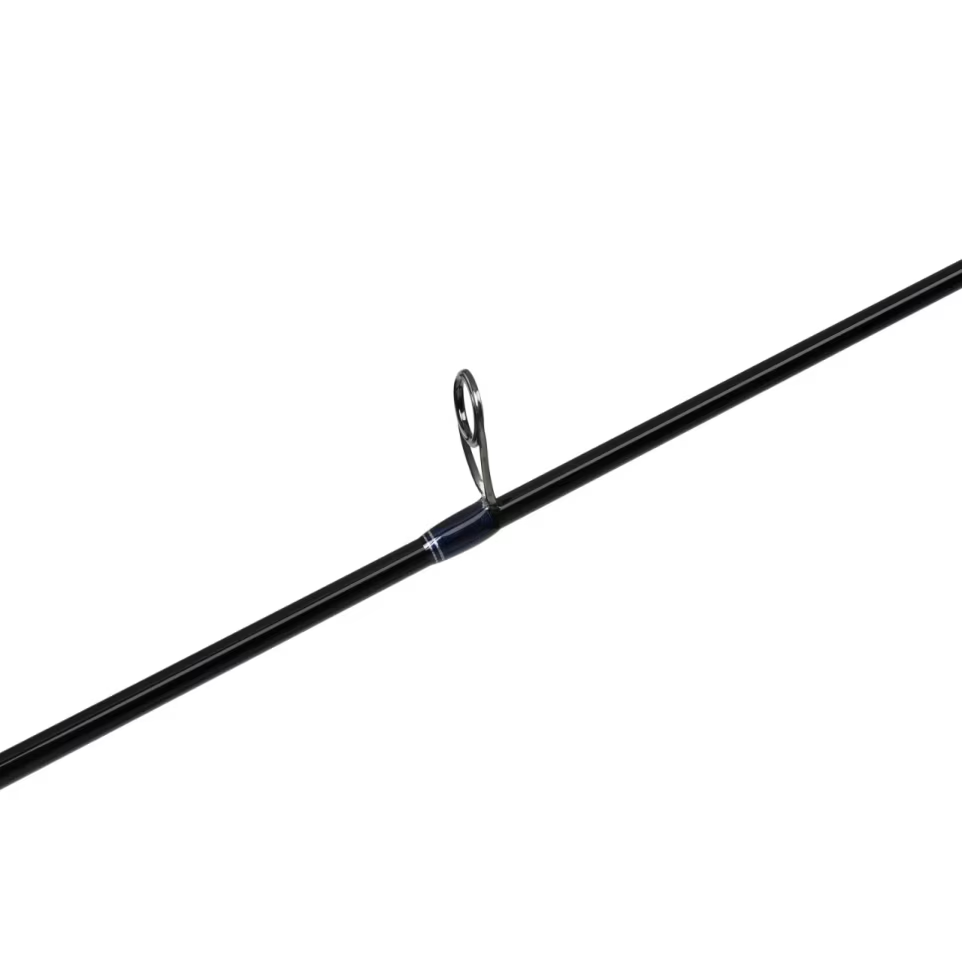
SeaGuide Zirconia Guides
The published specifications identify SeaGuide Zirconia guides on the spinning models.
Guides play an important role because the fishing line must travel through the guide train during casting, retrieval, and fish fighting.
For spinning tackle, consistent line management is particularly important.
Supporting Braided-Line Systems
Modern saltwater jigging is frequently paired with braided main line because its low stretch can provide direct communication between lure and angler.
With an appropriate guide system, line movement can be managed efficiently as the jig is dropped, worked, and retrieved.
However, line selection should still be based on the complete setup rather than guide material alone.
One-Piece Construction
The listed spinning models are specified as one-piece rods.
A one-piece construction can provide a continuous blank from butt to tip.
For anglers who prioritize a dedicated offshore setup, this can be appealing because the rod is kept as a single unit during use.
Transport Considerations
One-piece construction should also be considered before purchase.
Vehicle storage, boat storage, travel, and rod-tube requirements may all be affected by the overall length.
For this particular lineup, the listed spinning models are 6’0″, which can make them comparatively manageable for boat-based jigging.
Understanding the 6’0″ Length
A six-foot rod can be well suited to vertical jigging from a boat.
Because the presentation is generally directed downward rather than horizontally, excessive rod length is not always necessary.
A shorter platform can help keep movements controlled while allowing the angler to work a jig directly below the boat.
Boat-Based Advantages
From a boat, the lure can be positioned vertically beneath the angler.
Consequently, a compact jigging rod can be easier to manipulate than a long casting rod.
This can be especially useful when the boat is drifting over reefs, drop-offs, wrecks, or offshore structure.
Reel Pairing
A suitable spinning reel should be selected according to the rod power and intended fishing conditions.
Rather than focusing only on reel size, anglers should evaluate:
- Line capacity
- Drag capability
- Gear ratio
- Retrieve rate
- Overall balance
- Corrosion resistance
- Handle ergonomics
- Spool design
- Intended target species
A properly matched reel can allow the rod to perform more naturally.
Reel Size Considerations
There is no universal reel size that should be paired with every model.
Instead, the reel should be selected after the expected line strength, jigging depth, target fish, and drag requirements have been determined.
For lighter applications, a compact spinning reel may provide the desired balance.
For heavier offshore situations, a larger saltwater-oriented spinning reel may be preferred because additional line capacity and drag capability can be useful.
Balance Is Important
A reel that is too large can make the outfit feel unnecessarily heavy.
Conversely, a reel that is too small may not provide enough line capacity or drag performance for the intended application.
Therefore, the best combination is the one in which the rod, reel, line, leader, and lure are working together as a coherent system.
Braided Main Line Selection
Braided line is widely associated with modern jigging because minimal stretch can improve sensitivity and lure control.
When a jig is being worked at depth, excessive stretch can make communication between angler and lure less direct.
With braided line, movement can be transmitted more immediately.
Matching Line to Rod Power
Line strength should be selected according to the specific model and fishing situation.
A Light setup should not automatically be equipped with extremely heavy line simply because large fish might occasionally appear.
Likewise, a Medium Heavy outfit may be under-equipped if very light line is selected for a structure-heavy environment.
The target species should therefore remain central to the decision.
Leader Selection
A leader can serve several purposes.
It may provide additional abrasion resistance, offer a connection point for terminal tackle, or help manage the demands of rocks, reefs, wrecks, and other structure.
Fluorocarbon and monofilament leaders are commonly considered for different saltwater applications.
Fluorocarbon Leaders
Fluorocarbon may be selected when abrasion resistance and a relatively inconspicuous connection are valued.
It can be particularly useful when fish are pressured or when the fishing environment contains abrasive structure.
Monofilament Leaders
Monofilament can provide stretch and shock absorption.
That characteristic may be useful in situations where some elasticity is desired between the braided main line and terminal tackle.
The final choice should be based on water clarity, structure, target species, lure design, and personal preference.
Choosing the Right Jig
Metal jig selection can significantly influence the effectiveness of a vertical presentation.
The jig should not simply be chosen by appearance.
Instead, several factors should be considered.
Jig Weight
Weight affects how quickly a jig reaches depth.
In deeper water or stronger current, a heavier jig may be required to maintain a useful vertical presentation.
In shallower or calmer conditions, a lighter option may be easier to work.
The rod’s intended lure range should always be respected when determining which jig weight is appropriate.
Jig Profile
Different jig profiles produce different movement patterns.
Long, narrow designs may fall quickly and can be useful when depth must be reached efficiently.
Shorter or wider profiles can provide different fall characteristics and may be useful when a more erratic presentation is desired.
Jig Finish
Color and reflective finishes can also be varied.
Silver, blue, pink, glow, and other patterns may be carried so that presentation can be adjusted according to light level, depth, forage, and fish response.
However, movement and depth should not be overlooked simply because a particular color appears attractive.
Target Species
The Type J concept has been developed for applications ranging from bottom fish to pelagic species.
That broad positioning allows the platform to be considered for a variety of saltwater environments.
Potential targets can include:
- Snapper
- Grouper
- Amberjack
- Jack species
- Tuna
- Bonito
- Mackerel
- Other reef fish
- Various pelagic species
The actual suitability will depend on the selected power, line system, jig, drag setting, and local fishing conditions.
Reef Fish
Bottom-oriented species often hold close to structure.
When a fish strikes near a reef, the angler may have only a short amount of time to gain control before the fish reaches cover.
Consequently, adequate power can become important.
A suitable Medium or Medium Heavy configuration may be considered where the conditions demand additional authority.
Pelagic Fish
Pelagic fish can present a different challenge.
Rather than immediately diving into structure, they may make long runs through open water.
Here, line capacity and drag performance become especially important.
The rod remains part of the system, but success is determined by the combined performance of the entire outfit.
Speed-Jigging Technique
Speed jigging is based on active lure movement.
The jig is typically dropped to a selected depth and then worked upward using repeated rod and reel movements.
Because the Type J design has been developed around a faster loading and unloading behavior, it is particularly suited to an aggressive jigging tempo.
Basic Presentation
A simple sequence can be developed:
- Drop the jig to the desired depth.
- Maintain appropriate line tension.
- Lift the rod with a controlled movement.
- Retrieve line during the sequence.
- Allow the jig to fall or change direction.
- Repeat while varying cadence.
- Monitor for strikes throughout the presentation.
Different fish may respond to different rhythms.
Therefore, experimentation can be valuable.
Changing Cadence
A consistent rhythm may produce results on one day.
On another day, fish may respond better to irregular movement.
For that reason, anglers can experiment with:
- Faster lifts
- Shorter lifts
- Longer pauses
- Rapid retrieves
- Moderate retrieves
- Alternating cadences
- Different depths
The objective should be to identify the movement that produces the strongest response.
Working Different Depths
Depth can be one of the most important variables in offshore jigging.
Fish may be concentrated near the bottom, suspended above structure, or actively feeding higher in the water column.
Therefore, anglers should not assume that the deepest possible presentation will always be the most productive.
Bottom-Oriented Approach
When fish are associated with the bottom, the jig can be worked close to the structure.
However, contact with the bottom should be controlled.
Repeatedly allowing the lure to drag through rocks can increase snagging and abrasion.
Mid-Water Presentation
Fish can also suspend above the bottom.
In such situations, the jig can be stopped before reaching the seabed and worked through the productive zone.
This can reduce unnecessary contact with structure while allowing the lure to remain where fish are located.
Hook-Setting Technique
A strike during jigging may happen at almost any stage of the retrieve.
A fish can attack during the upward movement, while the lure is falling, or immediately after a cadence change.
Therefore, line awareness should be maintained throughout the presentation.
Maintaining Connection
Slack line can reduce control.
Whenever practical, contact with the lure should be maintained while still allowing the jig to perform its intended movement.
Once a fish is hooked, pressure should be applied smoothly rather than relying on sudden, uncontrolled movements.
Fighting a Fish
A successful hook-up is only the beginning.
Once the fish is connected, rod angle, drag pressure, line direction, and boat position become important.
The rod should be worked as part of the complete tackle system.
Avoiding Excessive Rod Angles
High-sticking can place excessive stress on the upper section of a rod.
Instead, controlled rod angles should be maintained while pressure is applied through the reel and the stronger portions of the blank.
This is particularly important when fighting powerful saltwater fish.
Fishing Around Structure
Structure can hold fish, but it can also create hazards.
Reefs, wrecks, rocks, ledges, and submerged formations can quickly turn a promising hook-up into a lost fish.
Therefore, preparation should begin before the lure enters the water.
Plan for the First Few Seconds
When targeting structure-oriented fish, the initial moments after a strike can be critical.
Appropriate drag settings, line strength, leader selection, and rod power should already have been established.
Consequently, less time may be spent making adjustments after the strike.
Current and Drift Considerations
Current can significantly influence jigging.
A strong current may pull the line away from the boat, reducing the vertical nature of the presentation.
In response, jig weight and boat positioning can be adjusted.
Maintaining Verticality
The closer the line remains to vertical, the more directly the jig can be controlled.
Therefore, the captain and anglers can work together to manage drift and positioning.
This collaborative approach can improve the consistency of the presentation.
Maintenance After Saltwater Fishing
Saltwater tackle should be maintained carefully.
After each trip, equipment should be inspected and cleaned according to the manufacturer’s care recommendations.
Basic Maintenance Routine
A simple routine can include:
- Rinsing salt residue from appropriate external surfaces
- Drying the rod before storage
- Inspecting guides for damage
- Checking the reel seat
- Examining the handle
- Inspecting the blank
- Checking line for abrasion
- Examining knots and leader connections
- Storing the rod in a protected location
Inspecting the Guides
The guide train should be checked regularly.
Small damage may cause line abrasion, particularly when braided line is being used.
Therefore, guides should be inspected before important fishing trips.
Protecting the Blank
The blank should not be scraped against hard surfaces unnecessarily.
Likewise, rods should not be stored where they can be crushed beneath heavy equipment.
Careful transportation can reduce avoidable damage.
Storage Recommendations
A dry, protected storage environment should be used whenever possible.
The rod should be stored away from excessive heat, direct sunlight, and unnecessary pressure.
During transport, a suitable rod sleeve or protective case can help reduce accidental impact.
Long-Term Storage
Before extended storage, the tackle should be cleaned and thoroughly dried.
Line should also be inspected before the next fishing trip.
Old or damaged leader material should be replaced rather than trusted simply because it was previously successful.
Frequently Asked Questions
What type of fishing is this rod designed for?
It is designed around jigging applications, particularly the faster tempo associated with speed jigging. Shimano positions the series for targets ranging from bottom fish to pelagics.
Is it a casting or spinning rod?
The lineup includes both casting and spinning versions. This particular product category refers to the spinning configuration.
What action is used?
The currently listed spinning models are specified with Fast action.
What powers are available?
Shimano lists Light, Medium Light, Medium, and Medium Heavy powers for the spinning lineup.
How long are the spinning models?
The listed spinning models are 6’0″ in total length and one piece.
What grip material is used?
High Density EVA is specified for the grips.
What guides are installed?
SeaGuide Zirconia guides are listed in Shimano’s U.S. specifications.
Is this suitable for saltwater?
The series is specifically positioned for jigging applications targeting saltwater species, including bottom fish and pelagics.
Can it be used with braided line?
A modern spinning jigging setup can be paired with braided main line, provided the line and terminal system are appropriately matched to the selected model and conditions.
Is it suitable for beginners?
It can be considered by anglers who are developing jigging skills, although beginners should learn appropriate drag settings, knot techniques, rod handling, and fish-fighting practices before targeting powerful species.
Buying Guide
Start With the Fishing Environment
Before selecting a model, consider where the rod will be used.
Different environments place different demands on equipment.
A calm, shallow reef environment may require a different setup from deep offshore water with strong current.
Therefore, location should be considered before power.
Match the Rod to the Target
The expected species should then be considered.
Smaller fish can often be approached with lighter tackle, while large and powerful species may require more authority.
The goal should be to select a rod that is strong enough for the expected application without making the entire outfit unnecessarily heavy.
Consider Jig Weight
The selected jig should remain within the rod’s intended range.
This is important because rod action and loading characteristics are designed around particular applications.
Using inappropriate lure weights can compromise both performance and equipment longevity.
Consider Your Reel
Once the rod has been selected, the reel can be matched to it.
The reel should provide adequate line capacity and drag performance for the target species.
Balance should also be evaluated.
A comfortable setup can be especially important when repetitive jigging movements are being performed for hours.
Why Choose a Dedicated Jigging Rod?
A specialized jigging rod can offer advantages over a generic spinning rod.
Its action and power are selected around a particular type of lure presentation.
Consequently, less compromise may be required.
Instead of adapting a general-purpose rod to jigging, the angler can start with equipment designed for the technique.
A More Focused Fishing Experience
Purpose-built equipment can simplify decision-making.
Once the appropriate rod, reel, line, leader, and jig have been selected, the angler can focus more attention on fish location and presentation.
This can make offshore fishing more organized.
SEO-Rich Semantic Applications
This platform can naturally be associated with a range of relevant fishing terms without excessive repetition of the primary product phrase.
Relevant Use Cases
- Saltwater jigging
- Speed jigging
- Vertical jigging
- Offshore jigging
- Metal jig fishing
- Pelagic fishing
- Reef fishing
- Boat jigging
- Saltwater spinning tackle
- Offshore spinning setup
- Jigging rod and reel setup
- Braided-line jigging
- Deep-water jigging
- Structure fishing
- Game fish tackle
These related concepts help communicate the product’s intended role while keeping the main keyword naturally distributed.
Product Highlights for Online Listings
- Fast-action jigging design
- 6’0″ one-piece spinning configuration
- Light through Medium Heavy power options
- High Density EVA grip
- SeaGuide Zirconia guides
- Designed for speed-jigging presentations
- Suitable for bottom fish and pelagic applications
- Built for vertical lure control
- Compatible with modern spinning-reel systems
- Suitable for braided-line setups
- Purpose-oriented offshore fishing platform
- Designed for aggressive jig pitching
- Available in multiple power configurations
Final Buying Perspective
A successful jigging setup is rarely defined by one component alone.
Instead, performance is created through the interaction between rod, reel, line, leader, jig, hooks, drag, boat position, and angler technique.
The Type J platform provides a specialized foundation for that system.
Its Fast action has been designed around quicker loading and unloading, while the available Light through Medium Heavy powers provide options for different applications. High Density EVA grips and SeaGuide Zirconia guides further support the practical design.
For anglers who prefer an aggressive jigging cadence, these characteristics can be especially relevant.
At the same time, model selection should remain application-specific.
A Light setup should be chosen for appropriate conditions. A Medium or Medium Heavy option can be considered when additional power is required. The reel, line, leader, and jig should then be matched accordingly.
Ultimately, the best setup is the one that fits the angler’s intended fishing environment.
Whether offshore structure is being explored, pelagic fish are being targeted, or metal jigs are being worked through different depths, a properly matched spinning outfit can provide a controlled and engaging fishing experience.
For anglers building a dedicated saltwater jigging collection, this series can therefore be positioned as a practical option where fast lure movement, manageable boat-side handling, and purposeful fish-fighting capability are desired.
SHIMANO TALAVERA TYPE SLOW J CASTING ROD
Purpose-Built Control for Modern Jigging
Controlled lure movement is at the heart of effective slow-jigging. Rather than relying entirely on aggressive rod movements, a more deliberate presentation can be created through carefully managed lifts, pauses, and drops.
That approach is supported by a purpose-oriented casting platform such as the SHIMANO TALAVERA TYPE SLOW J CASTING ROD.
For anglers exploring offshore structure, deeper water, or vertical presentations, consistent lure control can be extremely valuable. Furthermore, a rod that responds predictably can make repeated jigging sequences easier to manage.
Instead of excessive movement being required, the blank can be used to generate measured lure action. Consequently, more attention can be placed on depth, current, structure, and fish behavior.
Designed Around Slow-Jigging Techniques
Slow-jigging is distinguished by controlled movement.
A jig can be dropped through the water column before being lifted through a measured sequence. Once the lift has been completed, the lure can be allowed to fall again.
During that falling phase, the jig may flutter, glide, roll, or change direction depending on its shape and balance.
Controlled Blank Loading
Progressive loading can be beneficial during this style of fishing.
When pressure is applied through the handle, energy can be transferred into the blank. As the rod recovers, movement can then be transferred toward the lure.
This creates an important connection between the angler and terminal tackle.
Small changes in rod movement can be used to alter the presentation. Therefore, different cadences can be explored without completely changing the tackle system.
A Versatile Platform for Lure Presentation
Although slow-jigging is the central application, lure presentation itself can involve many different tackle categories.
The modern angler may move between metal jigs, soft plastics, swimbaits, underspins, and other presentations depending on conditions.
For example, a swimmer jig can be used when a swimming profile is desired, while soft plastic options such as creature-style baits can provide a more compact presentation.
Likewise, a popper bait or walking-style lure may be selected when surface activity becomes more productive.
Each lure requires a different approach.
Consequently, understanding how rod movement affects lure behavior becomes more important than simply selecting a lure based on appearance.
Working With Soft Plastic Fishing Baits
Soft plastics continue to be among the most adaptable lure categories available to anglers.
Creature-style profiles can imitate multiple types of prey. Craw-style designs can provide bulk and movement. Meanwhile, minnow-shaped plastics can be used when a slimmer profile is preferred.
Popular search terms such as Z Craw, Berkley Chigger Craw, Berkley jerk shad, Yum Sonar Minnow, and Gulp Minnow represent different approaches to soft-plastic presentation.
The important consideration is not the name printed on the package.
Instead, attention should be given to:
- Profile
- Buoyancy
- Fall rate
- Tail movement
- Water resistance
- Hook placement
- Jig-head compatibility
- Target depth
By evaluating these characteristics, a lure can be matched more effectively to the conditions.
Creature-Style Presentations
A creature bait can provide a larger profile while maintaining substantial water movement.
Such presentations can be particularly useful around structure, vegetation, and areas where fish are accustomed to feeding on larger prey.
A creature fish search may lead anglers toward several different lure styles, but the basic concept remains similar: a multi-appendage profile is created to produce movement.
Craw-Inspired Profiles
Craw-style soft plastics are frequently used because the appendages can create movement during both the fall and retrieve.
The Berkley Chigger Craw, Zoom Super Speed Craw, Missile D Bomb, and other similar categories demonstrate how varied creature and craw presentations can become.
Each design can produce a different combination of vibration, glide, bulk, and water displacement.
Jerk-Shad and Minnow Profiles
Slimmer profiles can be valuable when fish are feeding on small baitfish.
A jerk-shad style presentation can be rigged in several ways depending on the desired movement.
Meanwhile, compact minnow profiles can be effective around schooling fish, current breaks, and suspended targets.
The Yamamoto Scope Shad and other baitfish-shaped offerings are examples of the broader minnow-profile category.
Again, the important consideration is presentation rather than brand recognition.
Hook Selection and Terminal Tackle
Terminal tackle is often overlooked until a fish is lost.
Hook size, wire diameter, point design, and orientation can all influence hook penetration.
For example, a 4/0 hook size may be suitable for certain larger soft plastics, but the appropriate size should always be matched to the lure profile and target species.
Wacky-Style Rigging
Wacky rigging requires a hook that can maintain an effective position through the middle of a soft plastic.
A VMC wacky hook can represent this broader category of specialized terminal tackle.
Weighted options can also be considered when additional fall speed is required.
The Berkley Fusion19 Weighted Wacky Head is an example of the type of product anglers may encounter when researching weighted finesse presentations.
Why Hook Size Matters
A hook that is too large can interfere with lure action.
Conversely, a hook that is too small may not provide sufficient exposure for reliable penetration.
Therefore, hook selection should be based on lure size, fish size, cover, and rigging method.
Jig Heads and Tungsten Options
Jig heads can be used to alter both presentation and depth.
A Ned head can support compact finesse plastics. Meanwhile, specialized jig heads can be designed for swimbaits or larger profiles.
The 6th Sense Divine Swimbait Jig Head represents the swimbait-oriented end of this category.
Tungsten can also be selected when a compact, dense profile is desirable.
Products such as Northland tungsten jigs illustrate how material choice can influence terminal tackle design.
Chatter-Style and Bladed Presentations
Bladed lures combine vibration with a moving profile.
The Jack Hammer fishing lure and ChatterBait Elite EVO represent the broader bladed-lure category that has become popular among bass anglers.
These presentations are generally worked differently from vertical slow-jigging.
Nevertheless, understanding lure resistance can still be valuable.
When a lure creates substantial resistance, the rod’s response can provide feedback about speed and contact.
Crankbaits and Moving Lures
Crankbaits remain a major category within freshwater fishing.
Different diving depths can be achieved through variations in bill design, body shape, and retrieve speed.
Medium Diving Crankbaits
Medium-diving designs can be used when fish are positioned below the surface but above deeper structure.
A controlled retrieve can be maintained while the lure contacts cover or deflects from underwater objects.
The phrase medium diving crankbaits represents a useful search category for anglers comparing lure depths.
Deep-Diving Crankbaits
When fish are positioned deeper, a deeper-running design may be selected.
Searches for deep diving crankbaits bass typically center around lure depth, deflection, rod loading, and retrieval speed.
The Berkley Shallow Money Badger crankbait, for example, belongs to a shallower-running category rather than a deep-diving presentation.
That distinction matters when selecting a lure for a particular depth zone.
DT4 and Shallow Crankbait Applications
Compact crankbaits such as a DT4 can be useful when a shallow-running presentation is needed.
The objective should always be to match lure running depth to fish location.
Using a lure that consistently runs above the fish may reduce effectiveness. Conversely, a lure that dives substantially deeper than necessary may create unnecessary contact with structure.
Topwater and Frog Fishing
Surface fishing introduces an entirely different dimension.
A lure can be presented across vegetation, open water, shallow flats, and other areas where fish are actively feeding near the surface.
Frog Fishing
Frog fishing is especially associated with heavy vegetation and shallow cover.
A dedicated frog rod and reel setup can provide the leverage required to manage fish around dense cover.
The rod should be matched to the lure and environment.
Line selection also becomes important.
Walking and Buzzing Frogs
Different frog designs create different surface actions.
A walking frog can be manipulated side-to-side across open areas.
Meanwhile, a buzzing-style frog can be retrieved more continuously.
The Sprinker Frog represents a category where a soft-bodied frog is combined with additional surface disturbance.
Buzzbaits for Bass
Buzzbaits are another surface-oriented category.
A rotating blade is used to create vibration and surface disturbance while the lure is retrieved.
Buzzbaits for bass can be particularly effective when fish are actively feeding near shallow cover.
The Cavitron buzzbait is one example within this broader lure category.
Swimbaits and Glide Baits
Large-profile presentations can be used when bigger forage is being targeted.
A glide bait is designed to produce a sweeping side-to-side movement.
The 6th Sense glide bait category has become particularly recognizable among anglers exploring this style.
Large Swimbait Considerations
Larger lures require appropriate tackle.
Rod power, reel capacity, line strength, and leader selection should all be considered together.
A rod designed for light presentations should not automatically be used with oversized lures.
Likewise, a reel should be matched to the intended lure weight and retrieve demands.
Wakebaits and Surface Swimmers
Wakebaits are designed to move close to the surface.
A Rat wakebait or similar presentation can be retrieved slowly enough to create a visible disturbance.
The River2Sea S-Waver is associated more closely with glide-style swimbait fishing, illustrating how lure categories can overlap while still having different movement characteristics.
Braided Fishing Line Considerations
Line selection is critical across many fishing techniques.
Braided line can provide high strength relative to diameter, making it useful for applications where line capacity and sensitivity are important.
Popular products include Sufix 832 braided fishing line, PowerPro Maxcuatro, and PowerPro 30lb braid.
However, no single line should automatically be treated as the best option for every fishing situation.
Choosing Line Strength
A 30-pound braid may be appropriate for some applications.
However, heavier cover, larger fish, or offshore conditions may justify a different strength.
The leader should also be considered.
Abrasion resistance can become especially important around rocks, vegetation, docks, wrecks, and other structure.
Connecting Line to the Reel
Before fishing, the line should be securely attached to the spool.
A suitable knot to tie line to reel should be selected based on the reel and line type.
Backing may also be used when appropriate to reduce spool slippage and improve line management.
Baitcasting Reel Selection
A baitcasting reel can provide precise casting control and strong mechanical leverage.
The Lew’s baitcaster category, for example, includes reels designed for a variety of freshwater techniques.
Meanwhile, more specialized reel categories can be selected for different applications.
Best Crankbait Reel Considerations
Crankbait fishing places unique demands on a reel.
A suitable setup should provide:
- Smooth retrieve
- Appropriate gear ratio
- Adequate line capacity
- Comfortable handle
- Consistent drag
- Durable internal components
The best crankbait reel is therefore determined by the angler’s technique and lure selection rather than by price alone.
Premium Fishing Reels
Expensive equipment can provide refined materials, smoother operation, reduced weight, and advanced engineering.
However, higher price does not automatically guarantee better performance for every angler.
When considering expensive fishing reels, attention should be given to the actual application.
A reel designed for finesse fishing may not be the ideal choice for heavy cover.
Likewise, a lightweight reel may be excellent for repeated casting but less suitable for extreme offshore applications.
Vanquish Reel Applications
A Vanquish reel belongs to the premium reel category and can be considered when refined operation and lightweight performance are priorities.
The correct reel should still be selected according to the rod, line, lure, and intended species.
Spinning Reel Applications
Spinning tackle remains highly useful for finesse fishing.
The top spinning reels for bass should generally be evaluated according to smooth drag performance, weight, line management, spool design, and durability.
A spinning setup can be especially useful when lightweight lures are being presented.
Matching a Rod and Reel Combo
A rod reel combo can simplify equipment selection.
However, individually matched components can provide more control over balance and specifications.
The rod should be evaluated first.
Afterward, reel weight and spool capacity can be matched to the intended technique.
Tackle Organization
Efficient organization can make a fishing trip considerably easier.
A well-organized tackle system allows hooks, jigs, crankbaits, soft plastics, terminal tackle, and accessories to be located quickly.
A Plano tackle box can be used to separate different lure categories.
Organizing by Technique
One compartment can be assigned to terminal tackle.
Another can be dedicated to crankbaits.
Soft plastics can be separated according to profile.
Frog lures and topwater presentations can also be kept together.
This approach reduces time spent searching through equipment.
Fishing Nets and Landing Equipment
A suitable net can be valuable when larger fish are being landed.
A rubber fishing net can help reduce unnecessary contact with fish while providing a secure landing surface.
Larger applications may require a giant net or specialized landing equipment.
Products associated with Ranger nets illustrate the range of landing solutions available to anglers.
Why Landing Equipment Matters
The fight is not finished when the fish reaches the boat.
A poor landing technique can result in a lost fish or unnecessary handling.
Therefore, the net should be prepared before the fish reaches the boat.
The handle should remain accessible.
The net opening should be large enough for the expected catch.
Fishing Rod Holders
Transportation and storage can be improved with suitable rod holders.
A KastKing fishing rod holder represents one example of the broader category.
Rod holders can be useful in boats, vehicles, garages, and storage areas.
However, rods should always be secured in a way that minimizes impact and bending stress.
Fishing Masks and Personal Accessories
Fishing accessories extend beyond tackle.
Sun exposure, spray, wind, and changing weather can influence comfort during long sessions.
A Save Phace mask fishing search may lead anglers toward protective facial gear designed for demanding outdoor environments.
Comfort should remain a consideration alongside tackle performance.
Understanding Fishing Brands
The modern tackle market contains a large number of established and emerging manufacturers.
Terms such as best fishing gear brands and fishing bait brands are frequently searched by anglers comparing equipment.
However, the best brand depends heavily on the intended application.
A company known for finesse tackle may not specialize in offshore equipment.
Another manufacturer may focus heavily on terminal tackle.
Therefore, brand recognition should be combined with specification analysis.
Popular Lure Categories
Brands such as Lucky Craft, Zoom Bait Co., Missile Baits, Buckeye Lures, Nichols Baits, and Buzbe appear across different segments of the fishing market.
Each category can serve a different purpose.
For that reason, anglers should evaluate the actual characteristics of a lure rather than relying exclusively on brand reputation.
Specialty and Finesse Presentations
Finesse fishing often requires compact tackle and subtle lure movement.
A smaller hook, lightweight jig head, or compact soft plastic may be preferred when fish are pressured.
Terms such as Micro Max, fuzzy nuggets, Juvy Craw, and Mooch Minnow 2.5 represent examples of the diverse lure terminology found within modern fishing searches.
The common theme is presentation control.
Small Lure Advantages
Smaller profiles can be useful when forage is limited in size.
They can also be effective when fish are cautious.
However, small lures should be paired with appropriately scaled hooks and line.
Practical Fishing-Shop Buying Guide
Shopping for fishing equipment can quickly become overwhelming.
A typical fishing shop may contain hundreds of lure styles, hooks, lines, rods, reels, and accessories.
Therefore, buying decisions should be based on technique.
Before purchasing, consider:
- Target species
- Fishing location
- Water depth
- Cover type
- Lure weight
- Line strength
- Rod power
- Reel capacity
- Hook size
- Seasonal conditions
This approach can prevent unnecessary purchases.
Final Buying Perspective
Fishing equipment should support the way you actually fish.
A slow-jigging rod should be selected for the jigging technique being performed. A frog setup should be built around heavy-cover requirements. A crankbait system should be selected according to diving depth and retrieve style.
Likewise, line, hooks, reels, and accessories should be matched to the complete system.
The result can be a more efficient and enjoyable fishing experience.
The SHIMANO TALAVERA TYPE SLOW J CASTING ROD is best understood within that broader philosophy: specialized equipment is most valuable when it is matched to the technique, conditions, and angler using it.
Advanced Performance Guide for Slow-Jigging
Understanding Rod Loading
A slow-jigging presentation is influenced heavily by the way the blank responds under pressure. Instead of an abrupt transfer of energy being created, a more progressive response can allow the lure to be moved with greater control.
During a lift, the blank can be loaded gradually. As the rod recovers, energy can then be transferred toward the jig. Afterward, the lure can be allowed to fall naturally.
This sequence is particularly useful when subtle presentations are required.
Why Progressive Loading Matters
A progressive loading profile can provide several practical advantages:
- More controlled lure movement
- Smoother transitions between lifts and drops
- Better management of changing lure resistance
- Improved connection between angler and terminal tackle
- More predictable presentation during repeated jigging cycles
Consequently, the rod can become an active part of the lure presentation rather than simply being used as a lever.
Managing Jig Movement
Different jigging movements can produce significantly different lure actions.
A short lift can create a compact movement. A longer lift can generate more displacement. Meanwhile, a controlled pause can allow the lure to fall through the water column.
The cadence can therefore be modified according to fish behavior.
Slow Cadence
When fish appear less aggressive, a slower sequence can be tested.
The jig can be lifted gently before being allowed to fall. A longer pause can then be introduced.
This type of presentation can be useful when fish are reluctant to chase rapidly moving prey.
Moderate Cadence
A moderate rhythm can be used when fish are actively feeding but are not responding to aggressive movement.
Repeated lifts can be combined with controlled falls.
By maintaining consistency, productive water can be covered efficiently.
Faster Cadence
A faster sequence may be explored when fish are highly active.
However, speed should not be increased simply for the sake of increasing activity. Instead, lure response and fish behavior should be observed.
If strikes become more frequent, the productive rhythm can be maintained.
Choosing the Right Jig Profile
Jig shape can influence descent speed, movement, and resistance.
A narrow profile can cut through current efficiently. A wider body can create additional resistance during descent. Asymmetrical designs can produce irregular movement.
Therefore, jig selection should be based on the presentation being attempted.
Compact Jigs
Compact designs can be useful when deeper water needs to be reached efficiently.
Because less surface area is presented to the water, a compact jig can descend quickly.
This can be advantageous when strong current is present.
Wider Jigs
A wider profile can create more resistance.
As a result, the fall may become slower and more pronounced.
This can be valuable when fish are responding to falling presentations.
Asymmetrical Designs
An irregular body shape can encourage unpredictable movement.
During a controlled fall, the jig may roll, glide, or flutter.
Such movement can create a presentation that differs from a straightforward vertical descent.
Fishing Different Water Columns
A productive jigging strategy should not focus exclusively on the bottom.
Fish may be suspended several feet above structure.
They may also move upward to intercept a falling lure.
Consequently, the entire water column can be explored.
Bottom-Oriented Fishing
When fish are holding close to the bottom, the jig can be allowed to approach the productive zone before the retrieve is started.
However, repeated contact with the bottom should be avoided when snagging becomes a concern.
A controlled lift can keep the lure above the most hazardous structure.
Mid-Water Presentations
Suspended fish can often be targeted with repeated lifts and falls through a specific depth.
Once the productive depth has been identified, the same zone can be worked repeatedly.
This approach can reduce unnecessary effort.
Upper-Water Intercepts
Some fish may rise significantly above the bottom to intercept prey.
When this behavior is observed, the lure can be worked higher in the water column.
Depth control can therefore become just as important as jig movement.
Reading Offshore Conditions
Weather, current, water clarity, depth, and structure can all influence fishing performance.
A technique that works in calm water may require modification when current increases.
Likewise, lure color and profile may become more important when visibility changes.
Current
Current can alter the position of the jig.
As water movement increases, additional line angle can be created.
The lure may therefore drift away from the intended vertical path.
Adjusting for Current
A heavier jig can sometimes improve depth control.
However, the lure should remain within the rod’s appropriate working range.
Boat positioning can also be changed.
By moving the boat with the current, better vertical alignment may be restored.
Wind
Wind can affect both boat movement and line management.
Even when current is moderate, surface wind can create substantial drift.
Therefore, boat control and line observation should be maintained throughout the presentation.
Offshore Structure and Fish Positioning
Underwater structure often creates concentrated fishing opportunities.
Rock piles, ledges, wrecks, reefs, and depth transitions can provide shelter and feeding areas.
However, structure can also create abrasion risks.
Fishing Above Structure
Rather than continuously allowing the jig to contact the bottom, the lure can be maintained above the structure.
The productive zone can then be repeatedly covered.
This strategy can reduce snagging while still allowing fish to be targeted effectively.
Working Around Wrecks
Wreck fishing requires additional caution.
Fish can use the structure as an escape route.
Therefore, controlled pressure should be applied immediately after a hookup.
Line should also be monitored carefully for abrasion.
Combining Jigs With Different Presentations
Although a dedicated slow-jigging approach is highly specialized, modern anglers often move between lure categories.
A swimmer jig, for example, can be useful when a swimming presentation is desired.
Meanwhile, a Ned head can be selected for a compact finesse approach.
An underspin can add flash and vibration to a soft-plastic presentation.
A crankbait can then be used when covering horizontal water becomes more productive.
The key is to understand that every lure category requires a different retrieval strategy.
Soft-Plastic Selection Guide
Soft plastics are available in countless profiles.
Craws, minnows, shad, worms, creature baits, and swimbaits can all be presented differently.
Craw-Style Plastics
Craw-style lures are often selected when a bulky profile and appendage movement are desired.
Options such as a Zoom Super Speed Craw or Berkley Chigger Craw demonstrate how different profiles can be used to create water movement.
The lure can be Texas-rigged, jig-mounted, or adapted to other presentations depending on the design.
Creature Baits
Creature-style plastics can create a larger silhouette.
The Berkley PowerBait MaxScent Creature Hawg represents the broader category of multi-appendage soft plastics.
Such profiles can be useful when a substantial presentation is desired.
Rigging Considerations
Hook size should be matched carefully.
A 4/0 hook size may be appropriate for certain larger soft plastics, but the correct selection depends on lure dimensions and target species.
The hook point should also remain sufficiently exposed for reliable penetration.
Minnow and Shad Presentations
Baitfish imitation can be highly effective when predatory fish are feeding on smaller forage.
Slim profiles can be rigged on suitable jig heads or hooks.
Jerk-Shad Presentations
A jerk-shad can be worked with short twitches, steady retrieves, or pauses.
The Berkley Jerk Shad category is representative of this type of baitfish imitation.
During a pause, the lure can be allowed to sink naturally.
Matching Weight to Depth
A lighter rig can be useful in shallow water.
A heavier presentation may be needed when deeper water or stronger current is involved.
The goal should be to maintain control without making the lure unnecessarily heavy.
Swimbaits and Glide Baits
Larger baitfish profiles can be used when larger forage is present.
A swimbait can provide continuous movement.
A glide bait, by comparison, can produce broader directional changes.
Glide-Bait Presentation
A 6th Sense glide bait can be worked through controlled sweeps and pauses.
The retrieve should be matched to water clarity and fish activity.
In clear water, longer pauses can sometimes allow fish to inspect the lure.
In stained water, greater movement may be needed to create detectable disturbance.
Crankbait Selection
Crankbaits are available in different diving ranges.
Choosing the correct depth is essential.
Shallow Crankbaits
A shallow-running lure can be used across flats, vegetation edges, and shallow structure.
The Berkley Shallow Money Badger crankbait belongs to this type of application.
Its intended running depth should be considered before it is selected.
Medium-Diving Crankbaits
Medium-diving crankbaits can cover water below the surface while remaining suitable for intermediate-depth structure.
The term medium diving crankbaits is often used when anglers are searching for lures that occupy this middle range.
Crankbait Deflection
Deflection can trigger reaction strikes.
When a crankbait contacts structure, the lure can change direction.
That sudden change can create an opportunity for nearby fish to react.
Deep-Diving Crankbaits
Deeper-running lures are useful when fish are positioned farther down.
Searches for deep diving crankbaits bass are commonly associated with deep structure, offshore ledges, and bass holding at depth.
The rod and reel should be matched to the resistance generated by the lure.
Topwater Fishing Applications
Surface lures offer another presentation style.
Walking baits, poppers, wakebaits, buzzbaits, and frogs can all create surface disturbance.
Walking Baits
A walking bait can be manipulated from side to side.
The retrieve is generally based on controlled rod-tip movements and line management.
A product such as the Livingston Walking Boss represents the walking-bait category.
Poppers
A popper bait can be used when a splash-and-pause presentation is desired.
Short movements can create surface disturbance.
Longer pauses can then be introduced.
Buzzbait Fishing
Buzzbaits are designed to create significant surface disturbance.
The rotating blade produces vibration and sound while the lure is retrieved.
Buzzbaits for Bass
The Cavitron buzzbait represents one recognized approach to this style of fishing.
Buzzbaits can be particularly useful around shallow cover, flats, and vegetation edges.
Retrieve Speed
A buzzbait can be retrieved slowly enough to remain near the surface.
However, the exact speed should be adjusted according to lure design and fish behavior.
If the lure begins sinking, retrieve speed can be increased.
Frog Fishing Around Heavy Cover
Frog fishing is often performed around vegetation and other dense cover.
A specialized setup can be advantageous because fish may need to be moved quickly away from cover after a hookup.
Frog Rod and Reel Selection
A frog rod and reel combination should be evaluated according to:
- Rod power
- Blank leverage
- Reel drag
- Spool capacity
- Line strength
- Handle design
- Overall balance
Heavy braided line is frequently selected for this environment because vegetation can create substantial resistance.
Baitcaster Selection
Baitcasting equipment can be highly versatile.
A suitable Lew’s baitcaster can be considered for anglers seeking casting control and mechanical leverage.
Other manufacturers, including Daiwa, offer numerous baitcasting platforms across different price categories.
Premium Reel Considerations
The phrase expensive fishing reels often reflects interest in premium construction and advanced features.
However, price should not be the only purchasing factor.
A moderately priced reel that is correctly matched to the application can outperform a premium reel that is poorly suited to the technique.
What to Evaluate
Look at:
- Drag consistency
- Gear durability
- Spool design
- Retrieve smoothness
- Weight
- Handle ergonomics
- Maintenance requirements
- Saltwater resistance where applicable
Spinning Reel Considerations
Spinning tackle remains highly effective for lightweight presentations.
A quality spinning reel can provide smooth line management and reliable drag performance.
Bass Applications
When researching the top spinning reels for bass, attention should be given to the lure weights being used.
Finesse techniques generally benefit from lighter, balanced equipment.
The rod should also be matched to the reel.
Rod Selection Across Techniques
Different lure categories can require substantially different rod characteristics.
A crankbait rod does not necessarily provide the ideal response for frog fishing.
Similarly, a finesse rod should not automatically be used with oversized swimbaits.
Bass Poles
The phrase bass pole is often used broadly when searching for bass fishing rods.
However, rods can differ considerably in length, power, action, and intended lure range.
Zodias Casting Rod
A Zodias casting rod represents a more technique-focused casting-rod category.
When comparing rods, anglers should look beyond the model name and examine the intended application.
Dobyns Fury Series
The Dobyns Fury Series Casting Rod FR 733C is another example of a bass-oriented casting rod frequently considered by anglers comparing equipment.
Its inclusion in a shopping search does not mean it is interchangeable with every other rod.
Instead, model specifications should be matched to lure weight and fishing technique.
Rod-and-Reel Balance
Balance can have a major effect on comfort.
If the reel is significantly heavier than the rod’s intended balance point, the setup may feel cumbersome.
Conversely, an appropriately matched reel can create a more natural feel.
Building a Rod Reel Combo
A rod reel combo can be convenient for anglers who want a ready-to-fish setup.
However, individual components can also be selected when precise balance is desired.
The best approach depends on experience, budget, and intended application.
Line Selection
Line is an essential part of every fishing system.
Braided, monofilament, and fluorocarbon lines each provide different characteristics.
Braided Fishing Line
Braided line is valued for its strength-to-diameter ratio.
Products such as Sufix 832 braided fishing line and PowerPro Maxcuatro represent popular categories within braided tackle.
30-Pound Braid
PowerPro 30lb braid may be appropriate for certain applications, particularly when stronger line is required.
However, line strength should always be matched to the target species, cover, lure, and rod.
Monofilament
When searching for the best mono line, anglers should consider stretch, abrasion resistance, knot strength, buoyancy, and diameter.
Monofilament can be particularly useful for selected topwater and moving-lure presentations.
Connecting Line to a Reel
Before the first cast, the line should be secured correctly.
The appropriate knot to tie line to reel can vary according to the reel, line type, and whether backing is being used.
The connection should be checked before fishing.
A poorly secured connection can result in unnecessary line slippage.
Terminal Tackle Organization
A large collection of hooks, jigs, weights, swivels, and lures can become difficult to manage.
A compartmentalized tackle box can simplify organization.
Plano Tackle Box
A Plano tackle box can be used to separate lure categories and terminal tackle.
One compartment can be dedicated to hooks.
Another can hold jig heads.
Crankbaits can be separated from soft plastics.
Hook Organization
Hook compartments can be arranged according to:
- Size
- Style
- Wire diameter
- Rigging method
- Target species
A size chart for treble hooks can also be useful when replacing damaged hooks.
Hook Brands and Specialized Terminal Tackle
The terminal tackle market includes numerous manufacturers.
Eagle Claw is widely recognized for hooks and fishing accessories.
VMC wacky hook searches are generally associated with specialized wacky-rigging applications.
Meanwhile, Decoy hooks can appeal to anglers searching for precision terminal tackle.
The most appropriate option should always be selected according to the lure and target.
Fishing Accessories
Modern fishing equipment extends well beyond rods and reels.
Landing nets, rod holders, protective equipment, tackle organizers, and maintenance products can all improve the fishing experience.
Rubber Fishing Nets
A rubber fishing net can be useful when a fish needs to be landed safely.
The mesh should be appropriately sized for the target fish.
Large Landing Nets
A giant net can be considered when larger fish are being targeted.
A larger opening can make landing easier while reducing the risk of the fish being lost at boat side.
Rod Holders
A KastKing fishing rod holder represents one example of a storage and transportation accessory.
Proper storage can help prevent unnecessary impact damage.
Livewell Care
For anglers using a livewell, water quality should be monitored carefully.
A suitable livewell treatment can be used according to the manufacturer’s directions when appropriate.
Temperature, oxygenation, water cleanliness, and handling time should all be considered.
Fish should not be subjected to unnecessary stress.
Maintenance After Fishing
Equipment maintenance can extend service life.
Saltwater exposure should be treated seriously.
Freshwater rinsing can help remove surface salt and debris.
Rod Maintenance
The blank should be inspected after each major trip.
Guides should be checked for damage.
The reel seat should also be examined periodically.
Reel Maintenance
Reels should be maintained according to manufacturer recommendations.
Moving parts should not be over-lubricated.
Salt and debris should be prevented from accumulating.
Choosing a Fishing Shop
When searching for a fishing shop or bait shops for fishing, shoppers should consider product selection, customer support, technical knowledge, shipping policies, and return procedures.
A good retailer should make product specifications easy to understand.
Comparing Fishing Bait Brands
A large selection can be useful, but excessive choice can also make buying difficult.
Instead of selecting products randomly, anglers should identify the technique first.
Then, lure profile and weight can be selected.
Finally, color and brand can be evaluated.
Building a Complete Tackle System
A well-rounded tackle collection does not need to contain every lure on the market.
Instead, it should contain reliable options for the conditions that are actually encountered.
A practical collection may include:
- Slow-jigging tackle
- Soft plastics
- Jig heads
- Crankbaits
- Topwater lures
- Frogs
- Swimbaits
- Terminal tackle
- Braided line
- Leader material
- Landing equipment
This approach can keep equipment organized while preserving versatility.
Frequently Asked Questions
Is a slow-jigging rod suitable for offshore fishing?
Yes, a purpose-built slow-jigging platform can be appropriate for offshore applications when the model’s specifications match the intended depth, lure weight, line, and target species.
Can different lure types be used with the same rod?
Some overlap between lure categories can exist. However, the rod should always be operated within its intended specifications.
Is braided line necessary?
Not necessarily. Braid can offer useful characteristics, but monofilament and fluorocarbon can also be appropriate for specific techniques.
What hook size should be used?
Hook size should be matched to the lure and target species. A 4/0 hook may be suitable for some larger soft plastics, but it should not be treated as a universal size.
Are premium reels worth the additional cost?
Premium reels can offer refined construction and performance, but value depends on the application. A correctly matched mid-range reel can be an excellent choice.
How should tackle be organized?
Lures can be separated by technique, while hooks and terminal tackle can be arranged by size and style. A compartmentalized tackle box can make this process easier.
Final Buying Checklist
Before purchasing equipment, review the following:
- Target species
- Fishing location
- Water depth
- Lure category
- Lure weight
- Rod power
- Rod action
- Reel type
- Line strength
- Leader material
- Hook size
- Storage requirements
- Maintenance needs
A complete setup should be evaluated as a system rather than as a collection of unrelated products.
Final Product Perspective
Purpose-built tackle is most valuable when its characteristics are aligned with the technique being performed.
Slow-jigging depends on deliberate lure control, measured rod loading, and consistent contact. Those characteristics can be supported by an appropriately matched casting platform.
At the same time, the wider fishing environment should always be considered. Lure choice, line selection, hook design, reel performance, and boat position all contribute to the final result.
Whether an angler is researching soft plastic fishing baits, crankbaits, frogs, glide baits, jigs, braided line, or premium reels, the same principle remains relevant: equipment should be selected according to application.
The strongest fishing setup is not necessarily the most expensive one.
Instead, it is the one in which every component works together.
A balanced rod can improve control.
A properly matched reel can improve handling.
Suitable line can maintain connection.
The correct hook can improve presentation and hookup potential.
A productive lure can complete the system.
Through careful equipment selection and consistent technique, a more confident fishing experience can be developed across a wide range of conditions.
Additional information
| MODEL/LENGTH | TTJS60L — 6'0", TTJS60ML — 6'0", TTJS60M — 6'0", TTJS60MH — 6'0" |
|---|
Related products
-
SHIMANO INTENZA SPINNING A ROD
€156.02Select options This product has multiple variants. The options may be chosen on the product page -
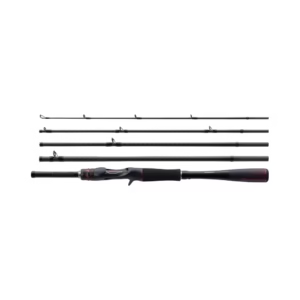
SHIMANO ZODIAS PACK ROD
€268.71Select options This product has multiple variants. The options may be chosen on the product page -
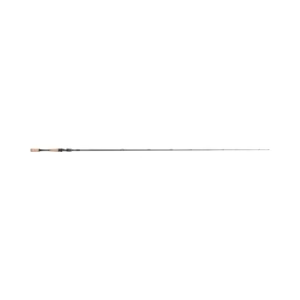
SHIMANO POISON GLORIOUS CASTING ROD
Price range: €468.08 through €494.09Select options This product has multiple variants. The options may be chosen on the product page
Reviews
There are no reviews yet.