
We Deliver Directly To Your Door
Description
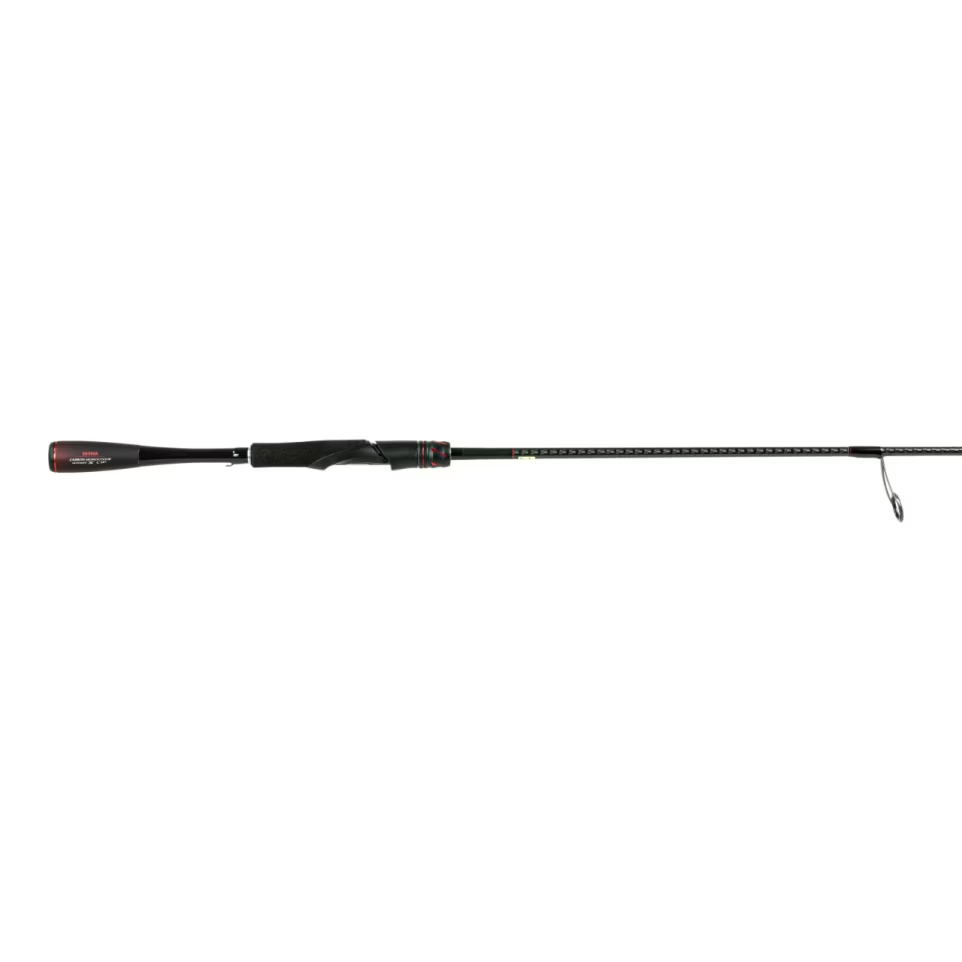
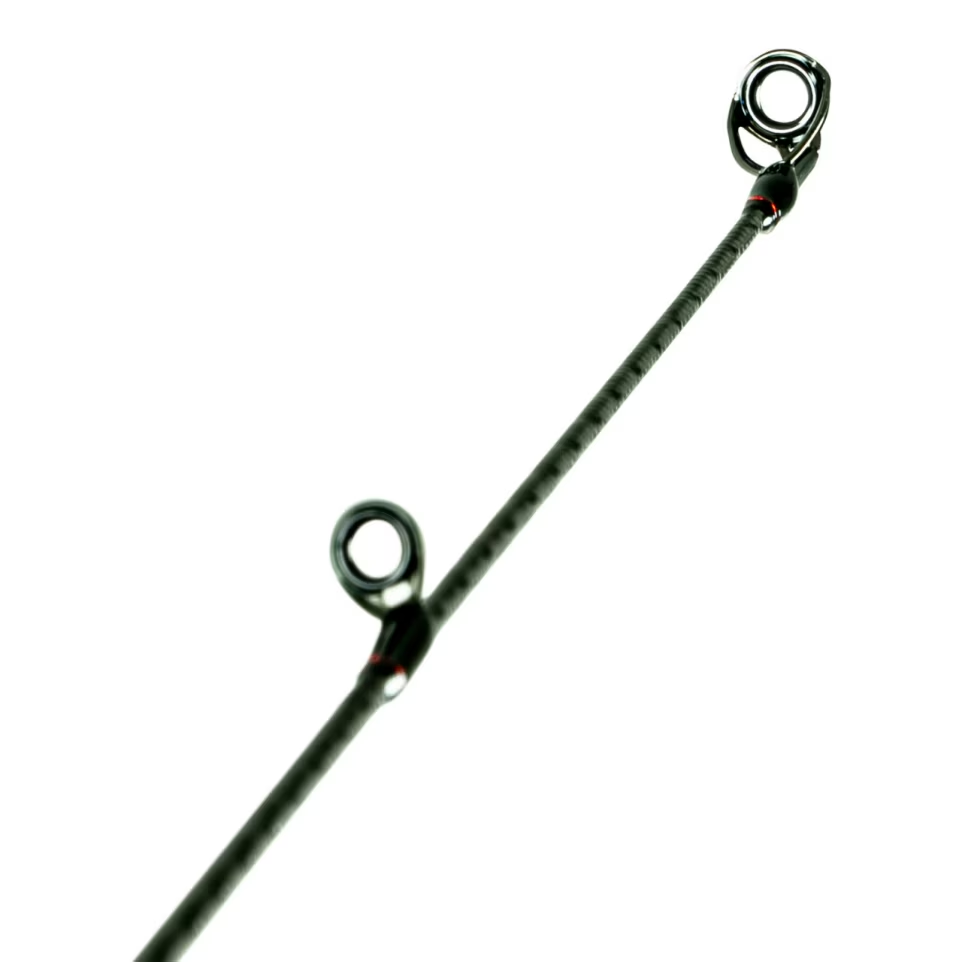
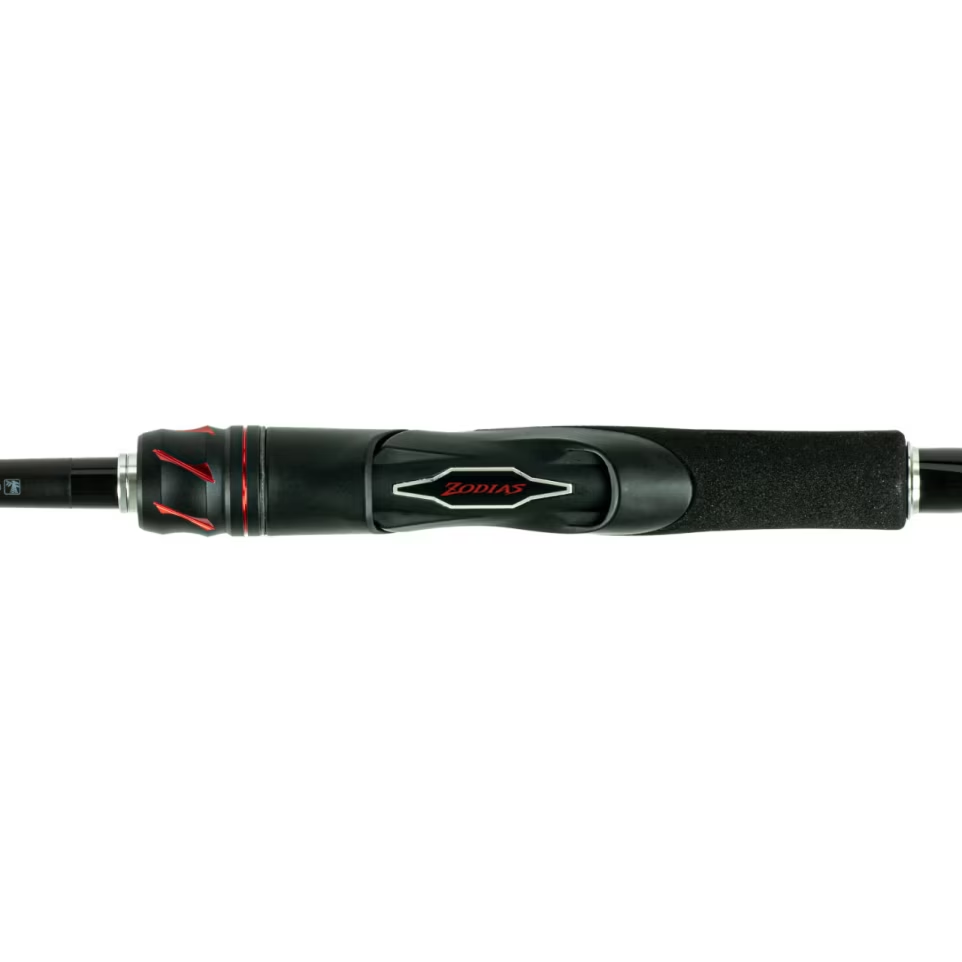
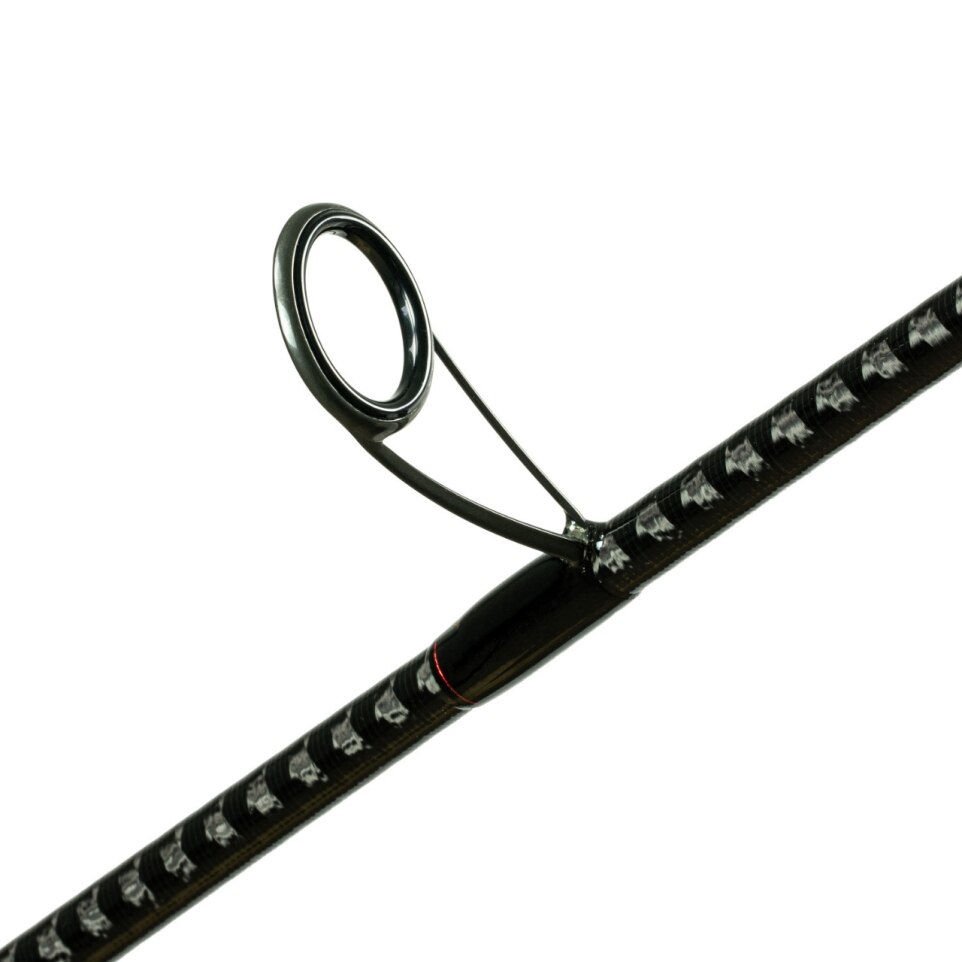
SHIMANO ZODIAS CASTING ROD
Precision, Power, and Refined Casting Performance
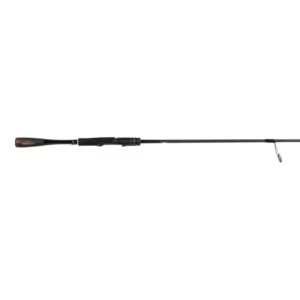
A high-performance casting experience is created when sensitivity, balance, strength, and control are brought together within one carefully engineered platform. That balance has been built into the SHIMANO ZODIAS CASTING ROD, where advanced rod construction is combined with a refined feel that can be appreciated by anglers who demand more from every cast. stella reel, slx
Rather than being designed around unnecessary bulk, the rod has been developed with performance and responsiveness in mind. Every component is positioned to support accurate lure presentation, controlled retrieves, dependable hook-setting power, and improved contact with the underwater environment. shimano reel, shimano scorpion
For demanding freshwater applications, a responsive casting rod can make a meaningful difference. Subtle lure movements can be felt more clearly. Changes in bottom composition can be detected more naturally. Furthermore, contact with cover, vegetation, structure, and suspended targets can be communicated through the blank with greater definition. shimano talicas, shimano saragosa sw
That performance is especially valuable when a presentation needs to be controlled with precision.
Whether a compact lure is being worked around cover or a larger presentation is being delivered across open water, a balanced casting platform can be relied upon to provide the control required for confident fishing. shimano fishing gearr, shimano reel companyy
Designed for Anglers Who Value Precision
A modern casting rod is expected to perform across a wide range of fishing situations. Consequently, versatility has become an important part of premium rod design.
With the ZODIAS platform, a performance-oriented approach has been adopted. Sensitivity is emphasized without allowing the overall design to become unnecessarily cumbersome. Power is incorporated without sacrificing the responsive feel that is expected during lure manipulation.
Because of this balance, the rod can be considered for anglers who want a more refined connection between their hands, lure, line, and target. shimano twin power sw spinning reel, shimano talica fishing reels
A Responsive Blank for Better Lure Control
A responsive blank is one of the most important elements of a premium casting rod.
When the blank is engineered to respond efficiently, lure movements can be translated with greater control. At the same time, feedback from the water can be communicated more effectively toward the angler’s hands. shimano stradic reels, shimano 1000 spinning reel
This becomes particularly useful when subtle presentations are being employed.
A soft twitch can be delivered with greater consistency. A controlled bottom presentation can be maintained more easily. In addition, changes in resistance can be recognized without requiring exaggerated rod movement.
For anglers who spend long sessions refining lure presentation, such responsiveness can become one of the most appreciated characteristics of the entire setup. shimano stella fishing reel, shimano fishing rod and reel
Strength Where It Matters
Sensitivity alone is not enough.
When a fish is hooked near structure, additional control can be required immediately. Strong hook-setting pressure may be needed, while the fish may also need to be directed away from vegetation, rocks, timber, docks, or other obstacles.
For that reason, dependable power has been incorporated into the overall design philosophy.
Instead of being treated as separate characteristics, responsiveness and strength are brought together. As a result, a more complete fishing experience can be provided. shimano salt reels, fishing equipment shimano
Built for Versatile Casting Applications
Different fishing situations demand different approaches. Therefore, a casting rod needs to be capable of adapting to the techniques being used.
The SHIMANO ZODIAS CASTING ROD has been positioned as a versatile option for anglers who value controlled presentations and dependable performance. shimano sahara reel, shimano baitcaster reels
From accurate short-distance casts to longer presentations across open water, the rod can be used with a variety of lure styles and techniques depending on the selected model.
Lure Presentation and Accuracy
Accuracy is often determined by more than casting distance.
A lure may need to be placed beside a submerged tree, along the edge of vegetation, beneath an overhanging branch, or directly beside a dock. In those situations, precision can be more valuable than simply achieving maximum distance. shimano electric fishing reels, stratic
A responsive casting platform allows the angler to remain connected to the lure throughout the cast.
As the lure travels toward the target, trajectory can be controlled. Once the lure reaches the water, rod movement can then be used to influence presentation.
Consequently, greater confidence can be developed when difficult targets are being approached. shimano fishing, shimano clarus casting rod
Short-Range Presentations
Short-range casting is frequently underestimated.
In reality, accurate short-distance placement can be essential when fish are positioned close to cover. A lure that lands too far away may be ignored, while a presentation that reaches the correct location can produce an immediate opportunity. shimano slx baitcaster reel, shimano talica reels
For these situations, precise rod loading and controlled release are valuable.
The blank is allowed to contribute to the casting motion, while the angler’s input can be translated into a more deliberate presentation. shimano casting reelss, shimano twin power sw
Longer Casting Situations
Distance can also become important when fish are holding away from the boat or shoreline.
With the appropriate reel, line, lure, and technique, a balanced casting rod can be used to generate controlled longer casts. Once the lure has landed, the rod can continue to provide feedback during the retrieve. shimano sienna 2500, shimano speedmaster 16
This combination of casting control and lure awareness can be particularly useful when large areas are being covered. shimano slx dc baitcasting reel, shimano fishing reels for sale
Sensitivity for More Connected Fishing
Sensitivity is one of the characteristics most often sought in a premium fishing rod.
When a lure is being retrieved through changing terrain, numerous forms of feedback may be generated. Contact with rocks can feel different from contact with vegetation. A soft bottom can produce a different response from a harder surface. Even subtle changes in lure movement can sometimes be detected through a responsive blank. shimano ultegra reel, shimano teramar fishing rods
Therefore, improved sensitivity can help an angler understand what is happening beneath the surface.
Feeling Structure Beneath the Water
Underwater structure cannot always be seen.
A submerged rock may be hidden beneath several feet of water. A branch may be positioned just below the surface. Similarly, changes in depth may occur gradually without being visually obvious.
Through the rod, these changes can sometimes be detected as differences in vibration or resistance. shimano stradic fm spinning reel, shimano nasci fc spinning reel
Once that information is received, lure speed and rod position can be adjusted accordingly.
Improved Awareness During the Retrieve
A retrieve is not simply a matter of winding line.
The lure may be expected to move through a specific zone, remain above vegetation, contact the bottom intermittently, or pass through a particular piece of structure.
With better feedback, adjustments can be made with greater confidence. shimano fishing reels baitcasting, shimano calcutta b ct400b
A pause can be introduced. The lure can be lifted. The retrieve can be accelerated or slowed. Rod movement can also be modified.
As a result, a more deliberate presentation can be maintained.
Balanced Construction for Extended Fishing Sessions
Comfort becomes increasingly important as a fishing session becomes longer.
A rod that feels excessively heavy or poorly balanced can create unnecessary fatigue. Over several hours, that fatigue may influence casting accuracy, lure control, and overall enjoyment. shimano curado rod, shimano reel baitcaster
For this reason, balance has been treated as an important part of premium rod design.
A More Refined Fishing Feel
The overall rod system is intended to feel cohesive in the hand.
When the reel, rod, line, and lure are properly matched, casting movements can be performed more naturally. Instead of fighting the equipment, the angler can focus on presentation and fish location. shimano twinpower sw spinning reel, shimano anglingg
This is especially valuable when repetitive casting is being performed throughout the day.
Hundreds of casts may be made during a serious fishing session. Consequently, even small differences in comfort can become noticeable.
Ergonomics and Control
The handle and reel-seat area play an important role in how a casting rod feels.
A comfortable grip allows the rod to be controlled without excessive pressure. At the same time, a secure reel connection helps maintain confidence when powerful casts or hook sets are required.
Because casting is repeated throughout an outing, ergonomic details should not be overlooked. shimano sedona, shimano saragosa
A Casting Platform for Modern Techniques
Modern bass fishing and other freshwater applications are often built around specialized lure techniques.
Different presentations require different combinations of casting accuracy, lure control, sensitivity, and hook-setting performance.
Accordingly, the rod can be integrated into a wide variety of approaches depending on its individual specifications.
Bottom-Contact Presentations
Bottom-contact techniques can benefit significantly from a responsive rod.
When a lure is dragged, hopped, or bounced along the bottom, feedback can help the angler understand how the presentation is behaving.
Contact with hard structure can be recognized. Changes in depth can become more apparent. Furthermore, a subtle bite can sometimes be distinguished from ordinary bottom contact. shimano vanfordd, shimano nasci, shimano tranx, shimano curado casting rod
For this reason, sensitivity remains highly valuable in bottom-oriented applications.
Texas-Style Presentations
Soft-plastic presentations often require controlled movement.
The lure may be allowed to fall, paused, lifted, dragged, or repositioned. During each stage, the rod is used to maintain connection with the lure.
A responsive casting rod can provide the control needed for these movements.
When a strike occurs, additional power may then be required to drive the hook through the fish’s mouth and move the fish away from nearby cover. shimano slx dc baitcasting reels, reel shimano spheros
Moving-Bait Applications
Not every presentation is performed slowly.
Moving baits can require consistent retrieves and accurate casting. Depending on the lure, resistance can also be generated throughout the retrieve.
A properly matched casting rod can help maintain control without making the presentation feel cumbersome.
Spinnerbaits and Chatter-Style Lures
Moving lures often produce continuous vibration.
That vibration is transmitted through the line and rod, giving the angler a constant indication that the lure is working correctly.
When the vibration suddenly changes, something may have happened.
The lure may have contacted vegetation. Debris may have become attached. A fish may have interacted with the presentation. shimano terez, shimano baitcaster combo
Consequently, a responsive rod can be useful even when a lure is being retrieved continuously.
Crankbait Considerations
Crankbaits are commonly used to cover water efficiently.
Their diving action and resistance can place consistent pressure on the rod during a retrieve. Therefore, the appropriate rod power and action should always be considered when selecting a specific model.
Where the selected configuration matches the lure and technique, casting control can be improved while the lure is being worked through its intended depth range. shimano calcutta 200, shimano vanford 1000
Hook-Setting Confidence
A bite can occur in an instant.
Once the fish has committed to the lure, the angler must respond quickly. The rod therefore needs to provide an effective connection between the hook, line, and angler.
Controlled Power During Hook Sets
Hook-setting technique varies according to lure type.
With some presentations, a quick and firm hook set may be required. In other situations, a controlled sweep can be more appropriate. shimano sellus, shimano spincast reels
Regardless of technique, the rod must be capable of transferring force through the line.
A well-balanced casting setup allows this movement to be performed with greater confidence.
Managing Fish Around Cover
Structure can create immediate complications after a hook set.
A fish may attempt to move toward vegetation, timber, rocks, or other obstacles. Once that happens, additional pressure can be needed.
The rod’s power becomes especially valuable at this stage.
Rather than allowing the fish to dictate the direction of the fight, greater control can be maintained when the tackle has been appropriately matched to the situation. shimano sensilite, shimano nasci spinning reel
Why Rod Selection Still Matters
Even a premium rod cannot replace correct model selection.
Different anglers use different lure weights, line types, techniques, and fishing environments. Therefore, the specifications of the selected model should always be reviewed before purchase.
Match the Rod to Your Technique
The ideal configuration depends on how the rod will be used.
A lighter setup may be preferred for finesse-oriented applications, while a more powerful configuration may be selected for heavier lures and stronger cover.
Likewise, line selection can influence how the rod performs. shimano curado, spheros,
Braided line, fluorocarbon, and monofilament each provide different characteristics. When the appropriate line is paired with the correct rod and reel, a more balanced system can be created.
Consider Your Target Species
Target species should also be considered.
The amount of power required for a small freshwater species may be very different from what is required when larger bass or other powerful fish are being pursued.
Additionally, the environment should be evaluated.
Open-water fishing can require different characteristics from heavy-cover fishing. Consequently, rod selection should always be based on the complete fishing situation. shimano stella spinning reel, shimano antares dc
Key Product Benefits
For quick reference, the major advantages of this premium casting platform can be summarized as follows:
- Responsive blank performance for improved lure control
- Refined sensitivity for greater underwater feedback
- Balanced construction for comfortable extended sessions
- Reliable power for controlled hook sets
- Accurate casting potential for demanding target placement
- Versatile application across numerous freshwater techniques
- Comfort-focused handling for repeated casting
- Professional-grade feel for experienced anglers
- Technique-oriented design for modern lure presentations
- Dependable performance when properly matched to the intended application
Built Around Confidence
Fishing equipment should not become a distraction.
Instead, it should allow attention to remain focused on the water, the lure, and the next opportunity.
That principle has been reflected throughout the design philosophy of the ZODIAS platform. Performance characteristics have been combined so that casting, presentation, sensitivity, and fish control can work together. shimano talavera, shimano trevala
As a result, confidence can be developed with every cast.
From the First Cast to the Final Catch
The value of a quality rod is often noticed over an entire fishing session rather than during one isolated moment.
At the beginning of the day, casting accuracy can be appreciated. During the retrieve, sensitivity can become more apparent. When a fish strikes, power and control can become critical.
Later, as hundreds of casts have been completed, balance and comfort can become equally important.
This complete experience is what separates a carefully engineered fishing rod from an ordinary piece of equipment. shimano fishing pole, shimano stella shimano slx dc
Who Is This Casting Rod For?
The product can be considered by anglers who want a refined casting experience without unnecessary complexity.
Experienced anglers can benefit from the responsive feedback and technique-oriented performance. At the same time, developing anglers can appreciate the improved control provided by a well-balanced setup.
For Tournament-Minded Anglers
When fishing competitively, small advantages can matter.
Accurate casting can save time. Better lure control can improve presentation. Sensitivity can help identify productive structure. Meanwhile, dependable power can become valuable when fish are hooked around cover.
Therefore, a high-performance casting rod can be an important component of a competition-oriented tackle system. shimano stella sw fishing reel, shimano vanford 3000
For Dedicated Recreational Anglers
Competitive fishing is not required to appreciate premium equipment.
Weekend anglers, traveling anglers, and dedicated freshwater enthusiasts can also benefit from improved sensitivity and control.
When fishing time is limited, every cast can become more valuable. A responsive setup can therefore help make those hours on the water more productive and enjoyable. shimano calcutta conquest reels, shimano calcutta reels
Choosing Confidence Over Compromise
Equipment selection often involves compromises.
A lightweight rod may sacrifice strength. A powerful rod may feel less responsive. A sensitive rod may not always provide the desired balance.
However, a carefully engineered platform is intended to reduce those compromises.
The SHIMANO ZODIAS CASTING ROD has been developed around the idea that sensitivity, strength, responsiveness, and comfort can coexist within one refined fishing system. shimano tekota, shimano slx rod, shimano vanford
That combination makes it an attractive option for anglers seeking a more advanced casting experience.
Final Thoughts
Precision is created through details.
From blank response to balance, from lure control to hook-setting power, every element contributes to the overall fishing experience.
The SHIMANO ZODIAS CASTING ROD is therefore suited to anglers who want their equipment to feel responsive, controlled, and purposeful. Whether a technical presentation is being worked around structure or open water is being covered with a moving lure, the right configuration can provide the connection needed to fish with greater confidence. slx dc, shimano anglingg
Ultimately, better equipment does not replace skill.
Instead, it allows skill to be expressed more effectively.
With the appropriate model, reel, line, and lure combination, a more refined setup can be created for a wide range of freshwater applications. For anglers who value sensitivity, casting precision, balanced handling, and dependable power, this platform can be positioned as a serious addition to a modern tackle collection. shimano spinning rod, reel shimano calcutta
Advanced Performance and Technique Compatibility
Modern fishing has become increasingly technique-driven. As a result, equipment is expected to provide more than basic casting ability. Greater sensitivity, controlled loading, accurate lure placement, and dependable fish-fighting power are now valued across many freshwater applications.
Within this environment, the ZODIAS casting platform has been developed around a performance-focused approach. Instead of relying on excessive weight or unnecessary complexity, attention has been placed on creating a balanced relationship between responsiveness and power. shimano sienna spinning reel, reel shimano stradic 4000
For anglers who spend significant time refining their presentations, this relationship can be especially important.
A lure needs to be delivered accurately. Once it reaches the target zone, movement needs to be controlled. During the retrieve, underwater feedback should remain available. When a strike occurs, enough power must be accessible for the hook set and subsequent fight.
Therefore, the rod becomes more than a simple casting tool. It becomes the connection between the angler and everything happening beneath the surface. shimano speedmaster, shimano stella sw
Responsive Performance During Every Presentation
Different lure techniques create different demands.
A finesse presentation may require subtle movement and heightened awareness. Meanwhile, a reaction-style lure may demand repeated casting and consistent retrieve control. Heavy-cover fishing can require even more authority once a fish has been hooked. shimano nexave, shimano nasci,
Because of these differences, versatility has been incorporated into the overall design philosophy.
Controlled Lure Movement
Lure control begins before the bait reaches the water.
During the cast, the blank is loaded and released according to the angler’s movement. Once the lure lands, the same rod becomes an instrument for manipulating the presentation. shimano bait casting, shimano fishing reel
Small wrist movements can be translated into lure movement. A lift can change the lure’s position. A pause can be introduced without losing contact. Likewise, a faster retrieve can be maintained when fish are responding to more aggressive presentations.
Consequently, responsiveness becomes useful throughout the entire fishing process rather than only during casting. shimano sustain, shimano spinning rods
Maintaining Contact With the Lure
Contact is particularly important when subtle bites are expected.
A lure may be resting on the bottom, suspended beside structure, or moving slowly through vegetation. In each situation, the angler benefits from maintaining awareness of the lure’s location.
When the blank responds clearly, information can be transmitted through the rod and into the angler’s hands.
That feedback can then be used to adjust the presentation.
Rather than blindly retrieving the lure, the angler can respond to what is being felt. shimano fishingg, shimano expride
Casting Accuracy Around Structure
Structure often creates some of the most productive fishing opportunities.
Docks, submerged trees, grass edges, rocks, weed lines, and other forms of cover can provide hiding areas for predatory fish. However, these locations can also make accurate casting more difficult.
A lure that lands several feet away from the target may not produce the desired presentation. shimano slx dc, shimano rodd
Precision Near Docks
Dock fishing frequently requires controlled placement.
Lures may need to be positioned close to pilings, beneath walkways, or alongside shaded areas. Therefore, accurate casting can become more valuable than maximum distance.
With a responsive setup, the angler can develop greater control over trajectory and lure placement.
Once the lure reaches the desired area, rod movements can then be used to keep the presentation within the strike zone. shimano spinning reell, shimano stradic
Working Tight to Cover
Heavy cover can be both an opportunity and a challenge.
Fish may hold deep within vegetation or close to submerged objects. At the same time, hooks can become exposed to obstacles during the retrieve.
For this reason, controlled lure movement is important.
A precise rod allows the presentation to be adjusted when necessary. If vegetation is contacted, the lure can be lifted or repositioned. If an obstruction is encountered, the retrieve can be modified before the lure becomes unnecessarily compromised.
Sensitivity and Underwater Feedback
One of the most desirable qualities in a premium fishing rod is the ability to communicate what the lure is doing.
Water hides much of the environment below the surface. Therefore, visual information is often limited.
Instead, the angler depends on line movement, lure resistance, and rod feedback.
Recognizing Bottom Composition
Not all underwater surfaces feel identical.
Hard rock can create a sharp response. Sand may provide a smoother sensation. Mud can produce a softer feeling, while vegetation may generate a combination of resistance and vibration.
Once these differences are recognized, productive areas can be identified more effectively.
For example, a change from soft bottom to hard structure may indicate an area where fish could potentially position themselves.
Detecting Subtle Changes
A sudden change in resistance does not always indicate a fish.
Sometimes, the lure has contacted an object. At other times, vegetation may have become attached.
Nevertheless, recognizing these changes can improve lure management.
The retrieve can be paused. The lure can be lifted. Alternatively, a different angle can be used to move the presentation through the area.
Such adjustments become easier when the equipment provides clear feedback.
Performance With Soft-Plastic Techniques
Soft plastics remain among the most adaptable lure categories in freshwater fishing.
Their versatility allows them to be rigged and presented in numerous ways. Depending on the technique, they may be dragged, hopped, pitched, flipped, swum, or allowed to fall naturally.
A responsive casting setup can support many of these movements.
Texas-Rigged Presentations
Texas-rigged soft plastics are often used around cover.
The presentation can be allowed to fall before being gently lifted or dragged along the bottom. Because the lure may spend considerable time near structure, feedback becomes particularly valuable.
When the lure touches an object, the rod can help communicate the change.
Similarly, when a fish picks up the bait, subtle differences may be detected.
Weightless Soft Plastics
Weightless presentations can require a more controlled casting motion.
Because the lure itself contributes less weight, timing and loading become important. A properly matched rod can help generate the necessary casting motion while preserving control once the lure reaches the water.
Furthermore, delicate presentations can be made when fish are responding negatively to aggressive movement.
Jig Fishing and Bottom Contact
Jigs are frequently used when fish are holding near structure or deeper cover.
Their concentrated weight makes them useful for probing the bottom. However, that same characteristic means the rod must remain connected to the lure throughout the retrieve.
Detecting the Bottom
A jig may be lifted and allowed to fall repeatedly.
Each contact with the bottom can provide information about depth and composition. When a rock or hard object is encountered, the sensation can be different from contact with softer material.
Consequently, sensitivity can become an important advantage.
Managing the Hook Set
Jigs can also require decisive hook-setting technique.
Once a fish takes the lure, line slack may need to be removed quickly. The rod is then loaded to transfer force toward the hook.
Where heavy cover is present, additional control may be required.
A powerful and responsive setup can therefore provide greater confidence when fish need to be moved away from obstacles.
Casting Crankbaits With Greater Control
Crankbaits are designed to cover water.
Their diving action allows anglers to search different depths while maintaining a relatively consistent retrieve.
Because these lures generate resistance, rod selection becomes important.
Maintaining a Consistent Retrieve
Once a crankbait reaches its working depth, consistency can help maintain its intended action.
The rod contributes to this process by absorbing and communicating the vibration generated by the lure.
If the lure contacts vegetation or another obstruction, a change in vibration may be noticed.
That change can be used as a signal to adjust the retrieve.
Deflection and Reaction Opportunities
Contact with structure can sometimes cause a crankbait to deflect.
When the lure changes direction unexpectedly, a reaction opportunity may be created. Therefore, anglers often intentionally work these lures around cover.
A responsive rod can help maintain the connection needed to control such presentations while still providing adequate power for the fight.
Spinnerbait and Vibrating-Lure Applications
Moving lures create continuous feedback.
Spinnerbaits, vibrating jigs, and similar presentations can produce substantial vibration throughout the retrieve. This characteristic allows the angler to remain aware of lure movement.
Reading Lure Vibration
A steady vibration often indicates that the lure is operating correctly.
If the sensation suddenly disappears, however, the lure may have encountered vegetation or debris.
Immediate adjustment can then be made.
In addition, a sudden change may occur when a fish interacts with the lure. Therefore, maintaining contact can be valuable even during fast retrieves.
Covering Large Areas
Search techniques often involve repeated casts.
An efficient casting setup can reduce unnecessary effort while allowing large sections of water to be explored.
With appropriate lure selection, the rod can be used to maintain controlled presentations across different distances.
Topwater Fishing Considerations
Surface presentations introduce another dimension to lure control.
Topwater lures depend heavily on cadence, speed, and direction. A slight change in rod movement can alter the lure’s behavior.
Walking-Style Presentations
Walking baits are often manipulated through alternating rod movements.
The lure is made to move from side to side across the surface. Consistency is important because an irregular cadence can change the presentation.
A responsive rod can help translate subtle movements into controlled lure action.
Maintaining Line Control
Line management becomes particularly important during topwater fishing.
Excessive slack can reduce responsiveness. Too much tension, on the other hand, can interfere with natural lure movement.
Therefore, a balanced setup can help the angler maintain the desired relationship between lure, line, and rod tip.
Frogging and Heavy-Cover Applications
Frog fishing can place significant demands on tackle.
Lures may be presented over vegetation, around heavy cover, or beneath dense surface growth. Once a fish strikes, rapid control can become necessary.
Power Around Vegetation
A strong rod can be valuable when fish need to be extracted from dense cover.
After the hook set, pressure may need to be maintained while the fish is directed toward open water.
For this reason, the selected model should always be matched to the expected cover, lure weight, line strength, and target species.
Controlled Hook Sets
Timing is also important.
Because some topwater presentations allow the fish to take the lure before the hook set is completed, patience and technique remain essential.
Once the appropriate moment arrives, the rod can be loaded firmly while line control is maintained.
Pairing the Rod With the Right Reel
Rod performance should never be considered independently.
The reel is an equally important component of the casting system.
A well-matched reel can complement the rod’s balance and casting characteristics.
Reel Size and Balance
The reel should provide an appropriate balance point.
When the combination feels natural in the hand, repetitive casting can become more comfortable.
Furthermore, the reel’s braking system, spool design, gear ratio, and drag performance should be considered according to the intended fishing technique.
Gear Ratio Considerations
Different lure presentations can benefit from different retrieval speeds.
Fast gear ratios can be useful when line needs to be recovered quickly. Moderate ratios may be preferred when a steady retrieve is desired.
The ideal selection depends on the lure and fishing method.
Choosing the Appropriate Fishing Line
Line selection can significantly influence the overall feel of a casting setup.
Three common categories include monofilament, fluorocarbon, and braided line.
Each option provides different characteristics.
Fluorocarbon
Fluorocarbon is frequently selected for applications where abrasion resistance and lower underwater visibility are valued.
It can also provide a direct feel during many bottom-contact techniques.
When paired with a responsive rod, this line type can create a highly connected setup.
Braided Line
Braided line is commonly appreciated for its strength-to-diameter ratio and sensitivity.
Because stretch is generally low, changes in lure movement can be communicated efficiently.
However, leader selection and knot quality should be considered when the environment demands additional abrasion resistance.
Monofilament
Monofilament remains a practical choice for many presentations.
Its stretch characteristics can provide a degree of shock absorption, which may be useful for particular moving-bait applications.
Ultimately, the line should be selected according to lure type, cover, water conditions, and target species.
Building a Complete Casting Setup
The best performance is often achieved when every component is properly matched.
The rod, reel, line, lure, and terminal tackle should work together rather than being selected independently.
Start With the Technique
The fishing technique should be identified first.
If bottom-contact presentations are planned, sensitivity and controlled power may receive greater priority.
For moving lures, retrieve consistency and casting efficiency may become more important.
When heavy cover is involved, additional strength may be required.
Match the Lure Weight
Lure weight should always remain within the recommended range for the selected rod.
A lure that is too light may not load the blank efficiently. Conversely, excessive weight can place unnecessary stress on the rod.
Therefore, the manufacturer’s specifications should be reviewed before a final setup is assembled.
Comfort During Long Fishing Sessions
Fishing can involve hundreds of repetitive movements.
Casting, retrieving, pitching, flipping, and hook setting may all be repeated throughout the day.
Consequently, comfort should be treated as a performance characteristic rather than simply a luxury.
Reducing Unnecessary Fatigue
A balanced rod can help reduce the effort required to maintain control.
When the equipment sits naturally in the hand, less adjustment may be needed between casts.
That can become increasingly valuable during extended sessions.
Better Control Through Ergonomics
Ergonomic design also contributes to precision.
A comfortable grip can support more consistent wrist movement. A secure reel seat can provide confidence when pressure is applied.
As a result, the angler can concentrate on technique rather than constantly adjusting the equipment.
Durability and Long-Term Use
Premium fishing equipment is expected to withstand repeated use.
A casting rod may be exposed to transportation, frequent casting, changing weather conditions, accidental contact, and the pressure generated during fish fights.
Caring for the Blank
Proper maintenance can help preserve performance.
After fishing, the rod should be inspected for visible damage. Guides, reel-seat areas, and connection points should also be checked regularly.
When dirt or residue is present, appropriate cleaning should be performed according to the manufacturer’s recommendations.
Transportation and Storage
Safe transportation is equally important.
Rods should not be placed where they can be crushed or bent unnecessarily. During storage, excessive pressure should be avoided.
A protective rod sleeve or appropriate storage system can also be used when suitable.
Why Construction Quality Matters
Fishing rods are subjected to repeated stress.
Every cast creates loading. Every hook set introduces additional force. During a fish fight, pressure may shift through different sections of the blank.
Therefore, material selection and construction quality are important.
Consistent Blank Response
A quality blank should provide predictable behavior.
When loaded during a cast, it should respond consistently. During a fight, the blank should provide controlled flex while supporting the angler’s movements.
This consistency can contribute to greater confidence.
Component Integration
Guides, reel seats, grips, and other components also contribute to overall performance.
When these parts are integrated effectively, the rod can feel more cohesive.
Rather than having one component dominate the experience, the entire system can work together.
Performance for Different Angler Skill Levels
A premium rod does not have to be reserved exclusively for professional anglers.
Its benefits can be appreciated across different levels of experience.
For Beginners
New anglers often benefit from equipment that provides clear feedback.
When lure movement can be felt more easily, technique can be learned more naturally.
Casting mechanics can also become easier to understand when the blank responds predictably.
For Experienced Anglers
More experienced users can take advantage of the same characteristics at a deeper level.
Small differences in bottom composition, lure movement, and fish behavior can be recognized more quickly.
Consequently, advanced anglers may find greater value in the rod’s sensitivity and responsiveness.
Confidence on the Water
Equipment confidence can influence decision-making.
When an angler trusts the rod, attention can remain focused on fish location and lure presentation.
Instead of worrying about whether the tackle will respond, the angler can concentrate on making the next cast count.
Every Cast Has a Purpose
A productive fishing session is often built from hundreds of individual decisions.
Where should the lure land?
How fast should it be retrieved?
Should the presentation be paused?
Is the lure contacting the bottom?
Has the fish moved toward cover?
The rod provides a physical connection through which many of these questions can be answered.
Practical Buying Considerations
Before purchasing a specific configuration, several factors should be evaluated.
Consider These Questions
- Which species will be targeted most often?
- Which lure categories will be used?
- What lure weights are normally preferred?
- Will fishing be performed around heavy cover?
- Is sensitivity a major priority?
- Will long casting distances be required?
- Which reel will be paired with the rod?
- Which line type will be used?
- Will the rod be transported frequently?
- How long are typical fishing sessions?
By answering these questions first, a more appropriate model can be selected.
Product Highlights at a Glance
For shoppers comparing premium casting equipment, the following characteristics can be highlighted:
- Responsive construction
- Sensitive feedback
- Controlled lure manipulation
- Accurate casting potential
- Balanced handling
- Technique-oriented performance
- Dependable hook-setting support
- Versatile freshwater applications
- Comfort for extended use
- Compatibility with multiple lure categories
- Performance-focused design
- Suitable for both developing and experienced anglers
-
A More Refined Approach to Freshwater Fishing
Fishing equipment should support the angler’s technique rather than interfere with it.
That principle has been carried throughout this platform.
Casting accuracy is supported by responsive loading. Lure control is enhanced through a connected feel. Underwater feedback is communicated through the blank. During the fight, controlled power can be applied when necessary.
Meanwhile, comfort remains important throughout the entire session.
This combination creates a more complete fishing experience.
From Presentation to Hook Set
A successful cast is only the beginning.
The lure must be presented correctly. Its movement must be maintained. Feedback must be interpreted. Once a fish strikes, the hook must be driven effectively and the fish must be controlled.
Every stage matters.
Therefore, a high-quality rod should be viewed as part of an entire fishing system rather than as an isolated piece of equipment.
Final Buying Perspective
For anglers who prioritize responsiveness, sensitivity, casting control, and balanced handling, the ZODIAS platform offers a performance-oriented option worth considering.
Its usefulness can be expanded through careful pairing with the appropriate reel, line, lure, and technique.
Most importantly, the correct model should always be selected according to the manufacturer’s current specifications, including length, power, action, lure rating, line rating, and recommended application.
When those factors are matched correctly, the resulting setup can provide a more connected and confident experience on the water.
The result is not simply another rod in the tackle collection.
Engineered Around the Complete Fishing Experience
Performance is rarely created by one feature alone. Instead, it is produced through the interaction of materials, construction, balance, sensitivity, power, and ergonomics. With the ZODIAS platform, these characteristics have been brought together to create a casting setup that can be used across demanding freshwater applications.
For anglers who spend long hours refining lure presentations, equipment consistency can be extremely valuable. A cast should be repeatable. A retrieve should remain controlled. Subtle feedback should be recognizable. Furthermore, enough reserve power should be available when a fish needs to be turned away from cover.
That complete relationship is where a premium casting rod can provide its greatest value.
Rather than being viewed only as a tool for launching a lure, the rod should be considered part of the entire communication system between the angler and the fish.
Blank Performance and Energy Transfer
The blank represents one of the most important parts of any fishing rod.
During a cast, energy is transferred through the blank as it loads and releases. Once the lure reaches the water, the same structure becomes responsible for transmitting movement and feedback.
Consequently, blank behavior has a direct influence on how a rod feels.
Controlled Loading During the Cast
A properly matched lure allows the blank to load naturally.
As the casting motion begins, energy is stored within the rod. During the forward movement, that stored energy is released toward the lure.
This process can help create smoother casting performance.
When the lure weight falls within the recommended range, the rod can be allowed to perform as intended. However, when an unsuitable lure is used, casting efficiency may be reduced.
Consistency From Cast to Cast
Consistency becomes particularly important during repetitive fishing.
When the same casting motion is repeated, predictable rod response allows the angler to develop a natural rhythm.
That rhythm can improve accuracy and reduce unnecessary movement.
Over an extended session, such consistency may contribute to both comfort and efficiency.
Understanding Rod Action
Rod action describes how and where the blank bends under load.
Different actions can produce different casting and lure-control characteristics. Therefore, action should always be considered alongside power, length, lure rating, and technique.
Faster Actions
A faster-action configuration generally places more of the bend toward the upper section of the blank.
Such a response can be useful when quick lure manipulation and direct feedback are desired.
For example, technical presentations may benefit from rapid communication between the angler and the lure.
Controlled Hook Setting
A responsive upper section can also support efficient hook-setting movements.
When a strike occurs, the angler can remove slack and apply pressure through the rod.
However, technique remains important. The correct hook-setting motion should always be matched to the lure and hook configuration.
Understanding Rod Power
Power refers to the amount of force required to load the rod.
Light, medium, medium-heavy, and heavy configurations are designed for different applications.
Therefore, the correct power should be selected according to lure weight, target species, cover, and fishing technique.
Light and Finesse Applications
Lighter configurations can be useful when smaller presentations are being employed.
The reduced lure weight can be paired with a more delicate presentation, especially when fish are less aggressive.
Such applications may include smaller soft plastics, lightweight rigs, or compact reaction lures, depending on the individual model.
Medium-Power Versatility
Medium-power configurations can provide a broad range of applications.
They may be used for several lure categories while still providing enough control for many common freshwater situations.
This versatility can make them attractive to anglers who prefer carrying fewer rods while maintaining access to multiple techniques.
Heavier Applications
More powerful configurations can be valuable when larger lures or heavy cover are involved.
Once a fish has been hooked near vegetation, timber, docks, or rocks, additional pressure may be required.
In those circumstances, the appropriate power rating can provide greater control.
Matching Rod Length to Fishing Conditions
Length affects casting, leverage, lure control, and maneuverability.
A longer rod can provide additional casting leverage and line-management capability. Shorter designs can be easier to maneuver in restricted spaces.
Consequently, the ideal length depends on the environment and technique.
Open-Water Fishing
Open water often provides room for longer casting movements.
A longer configuration may be useful when distance is important or when additional line control is desired.
Furthermore, greater length can provide additional leverage during certain presentations.
Tight Cover
Restricted environments can favor a more compact setup.
When branches, docks, or dense vegetation limit movement, excessive rod length may become inconvenient.
A more manageable configuration can allow casting angles to be changed more easily.
Lure-Specific Performance
A casting rod should be selected according to the lures that will be used most often.
Although versatility is valuable, no single configuration is ideal for every presentation.
Soft Plastics
Soft plastics can require precision and sensitivity.
Depending on the rig, the lure may be dragged, hopped, pitched, or allowed to fall naturally.
A responsive setup can help maintain contact throughout these movements.
Jigs
Jigs can place additional emphasis on bottom awareness and hook-setting power.
Because contact with structure is often part of the presentation, sensitivity can help the angler recognize changes below the surface.
Once a fish takes the lure, controlled pressure can then be applied.
Hard Baits
Hard baits can generate different forms of vibration and resistance.
Crankbaits, jerkbaits, and other moving presentations can require specific rod characteristics.
Therefore, model selection should be made according to the lure’s weight and action.
Jerkbait Control
Jerkbaits are often manipulated through repeated rod movements.
The lure may be pulled sharply, paused, and then allowed to suspend or rise according to its design.
Maintaining Cadence
Cadence can strongly influence a jerkbait presentation.
Some fish respond to aggressive movement, while others may prefer longer pauses.
A responsive rod allows the angler to make small adjustments to movement.
Managing Slack
Line slack also needs to be controlled.
Too much slack can reduce responsiveness. Excessive tension may restrict the lure’s natural movement.
A balanced setup can help maintain the desired amount of connection.
Swimbait and Larger-Lure Considerations
Larger presentations create additional loading and retrieve resistance.
Consequently, the selected rod must be capable of handling the lure within its stated specifications.
Casting Larger Presentations
Casting mechanics should be adjusted when heavier lures are used.
Instead of relying on sudden movements, a smooth loading motion can be employed.
This allows the blank to contribute to the cast while reducing unnecessary shock.
Fighting Larger Fish
Once a larger fish is hooked, the rod may experience significant loading.
The angler should maintain controlled pressure rather than attempting to overpower the fish with abrupt movements.
Proper drag adjustment and appropriate line selection should also be used.
Pitching and Flipping Performance
Pitching and flipping are commonly used when precise lure placement is required.
These techniques allow lures to be delivered quietly and accurately into areas where conventional casting may be less effective.
Short-Distance Accuracy
Short-distance presentations rely heavily on timing.
The lure needs to be controlled throughout the movement, while the rod must be positioned accurately.
A responsive blank can help translate small movements into precise lure placement.
Fishing Around Heavy Cover
Once the lure enters cover, the rod becomes an important control tool.
The presentation may need to be lifted over an obstruction or guided between branches.
If a fish strikes, additional authority may be required immediately.
Sensitivity During Finesse Fishing
Finesse fishing often depends on subtle feedback.
The lure may be moving slowly, and bites may be less aggressive.
Detecting Light Contact
A fish does not always produce a dramatic strike.
Sometimes, the line may simply feel heavier. A slight change in pressure may be noticed. Alternatively, the lure may stop moving unexpectedly.
In these situations, sensitivity can provide valuable information.
Maintaining Patience
Finesse fishing also requires controlled decision-making.
An immediate, aggressive reaction is not always appropriate.
Instead, the angler may need to maintain contact, observe the line, and then apply the appropriate hook-setting movement.
Fish-Fighting Control
Casting performance is important, but the fight itself is where rod power becomes especially meaningful.
Once a fish is hooked, the rod must provide enough authority to manage movement while maintaining controlled pressure.
Maintaining Pressure
Consistent pressure can help keep the hook securely positioned.
However, excessive force can create unnecessary risk.
Therefore, the angler should work with the rod, reel drag, and line rather than relying on the rod alone.
Turning Fish Away From Cover
When a fish moves toward an obstacle, direction control becomes important.
The rod can be positioned to influence the fish’s movement while pressure is applied through the line.
In heavy cover, rapid decisions may be required.
Drag and Rod Performance
The reel’s drag system works together with the rod.
Drag should not be treated as a substitute for rod power. Instead, both systems should complement one another.
Maintaining Balanced Pressure
When the fish makes a powerful run, controlled drag can allow line to leave the spool.
The rod then absorbs part of the movement while maintaining pressure.
This combination can reduce sudden stress on the terminal tackle.
Adjusting for Line Strength
Drag settings should also be considered in relation to line strength.
A setup should be balanced so that the weakest component is not unnecessarily overloaded.
Before fishing, knots, line condition, hooks, and connection points should be inspected.
Casting Distance Versus Accuracy
Maximum distance is not always the objective.
In many fishing situations, placing the lure precisely is more important than reaching the farthest possible point.
When Accuracy Matters Most
Structure fishing is a good example.
A lure placed close to a target can spend more time within the desired strike zone.
Therefore, controlled casting should often be prioritized over simply attempting to maximize distance.
When Distance Becomes Valuable
Open water presents different conditions.
When fish are spread across a large area, longer casts can help cover more water without moving the boat or angler as frequently.
A balanced rod and properly adjusted reel can therefore be useful when distance becomes part of the strategy.
Weather and Environmental Conditions
Fishing conditions can change rapidly.
Wind, temperature, water clarity, current, vegetation, and light levels can all influence lure selection and presentation.
Fishing in Wind
Wind can make casting more difficult.
Lighter lures may be affected more strongly, while heavier presentations can sometimes be easier to control.
Reel braking should be adjusted appropriately, and casting technique should be modified when necessary.
Fishing in Clear Water
Clear water may require more subtle presentations.
Natural lure movement can become particularly important when fish have additional time to inspect the bait.
A responsive setup can assist with controlled movements.
Fishing in Stained Water
In stained or muddy conditions, vibration and movement may become more important.
Lures that generate strong signals can help fish locate the presentation.
Rod feedback remains valuable because visual information can be limited.
Cold-Weather Considerations
Cold conditions can influence equipment and technique.
Line may behave differently. Fish may become less active. Slower presentations may become more effective.
Slower Presentations
During colder periods, a lure may need to remain within the strike zone longer.
Longer pauses can therefore be introduced.
The angler can benefit from equipment that maintains good contact during these slower movements.
Equipment Inspection
Cold conditions can also make equipment maintenance more important.
Guides should be kept clear of ice and debris where necessary. Line should be checked regularly for damage.
Warm-Weather Applications
Warmer conditions can create more active fishing opportunities.
Fish may become more willing to chase moving presentations, particularly during suitable periods of the day.
Faster Retrieves
Reaction lures can be retrieved more quickly when fish are actively feeding.
A responsive casting setup allows the angler to adjust retrieve speed and direction.
Early-Morning and Evening Fishing
Low-light periods can produce excellent opportunities.
Topwater presentations are frequently considered during these periods, although lure choice should always be adapted to the local conditions.
Rod Maintenance After Fishing
Proper care can extend the useful life of fishing equipment.
Even premium equipment can be affected by dirt, moisture, salt residue, impact, and improper storage.
Cleaning the Rod
After each fishing session, the rod should be checked for visible contamination.
A soft cloth can be used where appropriate, while manufacturer-recommended cleaning procedures should be followed.
Checking the Guides
Guide inserts should be inspected regularly.
Damage can create friction against the fishing line and may eventually contribute to line failure.
If a guide appears damaged, continued use should be avoided until the issue has been properly assessed.
Reel-Seat and Handle Care
The reel-seat area should also be kept clean.
Dirt and debris can interfere with proper reel attachment.
Checking the Reel Connection
Before fishing, the reel should be securely attached.
A loose connection can reduce control and may create unnecessary movement.
Maintaining the Grip
The handle should be kept clean and dry.
A secure grip supports better casting control and reduces the chance of accidental equipment loss.
Safe Transportation
Rod damage often occurs outside the water.
During transport, rods can be exposed to pressure, impacts, doors, vehicle compartments, or other equipment.
Using Protective Storage
A suitable rod sleeve or protective case can help reduce accidental damage.
Multiple rods should also be arranged so that guides and blanks are not placed under unnecessary pressure.
Avoiding Sharp Bends
The blank should never be forced into an unnatural position.
Although a fishing rod is designed to bend under controlled loading, concentrated pressure can cause damage.
Long-Term Storage
Storage conditions can influence equipment longevity.
Excessive moisture, heat, and physical pressure should be avoided.
Dry Before Storage
Equipment should be allowed to dry properly after use.
This is especially important when fishing in humid conditions or around saltwater environments.
Keep Components Protected
Rods should be stored where they cannot be stepped on or compressed.
A dedicated storage rack can be useful for anglers with multiple setups.
Understanding Specifications Before Purchase
Specifications should always be reviewed before selecting a model.
A rod can look ideal in photographs while still being unsuitable for a particular technique.
Length
Length affects casting leverage and maneuverability.
The intended fishing environment should therefore be considered.
Power
Power determines the general level of force for which the rod is designed.
Target species, lure size, cover, and technique should all be evaluated.
Action
Action influences how the blank bends and responds.
It can affect lure control, casting behavior, and hook-setting characteristics.
Lure Rating
The manufacturer’s lure rating should always be respected.
Using a lure outside the recommended range can affect performance and may increase the risk of damage.
Line Rating
The recommended line range should also be considered.
Line selection should be matched to the rod, reel, lure, and fishing environment.
Creating a Technique-Based Tackle System
A single rod can be useful, but a technique-based collection can provide greater flexibility.
Each setup can be optimized around a particular style of fishing.
Finesse Setup
A finesse-oriented configuration can be dedicated to lighter presentations.
Sensitivity, control, and comfortable handling can be prioritized.
General-Purpose Setup
A versatile setup can be built around commonly used lure weights and techniques.
Such a rod can become one of the most frequently used combinations in an angler’s collection.
Heavy-Cover Setup
A stronger configuration can be reserved for vegetation, timber, docks, and other demanding environments.
Additional power can provide greater control when fish need to be moved quickly.
Why Balance Should Not Be Ignored
Weight alone does not determine how comfortable a rod feels.
Two rods with similar weights can feel completely different because their balance points differ.
Balance in the Hand
A well-balanced setup can reduce the need for constant wrist correction.
This becomes increasingly important during long sessions.
Pairing Rod and Reel
The reel contributes significantly to overall balance.
Therefore, rod selection should ideally be considered alongside the reel that will be installed.
The Value of Responsive Feedback
Feedback is one of the characteristics that can become more noticeable with experience.
New anglers may initially focus on casting distance and lure appearance. Over time, however, attention often shifts toward what can be felt through the equipment.
Learning Through Feedback
A responsive setup can help anglers learn how different surfaces feel.
Hard structure can be distinguished from softer bottom conditions. Vegetation can be recognized. Lure vibration can be monitored.
As this awareness develops, underwater structure can be interpreted more effectively.
Building Confidence
Confidence grows when equipment provides predictable information.
The angler can make decisions based on what is being felt rather than relying exclusively on visual clues.
A Practical Approach to Product Selection
Purchasing premium fishing equipment should be approached thoughtfully.
Rather than selecting a model solely because of its appearance or reputation, the intended application should be identified first.
Identify the Main Technique
Ask what the rod will be used for most frequently.
Will it be used for soft plastics?
Jigs?
Moving baits?
Topwater lures?
Heavy-cover presentations?
Or a combination of several techniques?
Once the primary application has been established, model specifications can be compared more effectively.
Consider the Fishing Environment
A rod used primarily from a boat may have different requirements from one used from the bank.
Shoreline anglers may need longer casting capability in certain environments. Boat anglers may prioritize compact handling and precise target casting.
Therefore, the fishing environment should always be included in the decision.
Product Benefits for Online Shoppers
For product pages, the most important characteristics can be summarized clearly:
- Performance-focused blank construction
- Responsive lure control
- Sensitive underwater feedback
- Reliable casting performance
- Technique-oriented power
- Balanced handling
- Comfortable long-session operation
- Support for precise presentations
- Suitable for multiple freshwater applications
- Compatible with a wide selection of reels and lines
- Designed for anglers who value control
- Built for repeated fishing use when properly maintained
Frequently Considered Questions
Is this type of rod suitable for experienced anglers?
Yes. A responsive and technique-focused casting platform can be especially valuable to experienced anglers because subtle differences in lure movement and underwater structure can be recognized more easily.
At the same time, developing anglers can benefit from the predictable response offered by a quality setup.
Can it be used for different fishing techniques?
That depends on the individual model.
Different lengths, powers, actions, lure ratings, and line ratings are intended for different applications. Consequently, the exact specifications should be checked before purchase.
Is sensitivity important for bass fishing?
Sensitivity can be highly useful because many bass techniques involve contact with structure, vegetation, or the bottom.
However, sensitivity is only one factor. Correct power, action, lure selection, line choice, and technique should also be considered.
Does a longer rod always cast farther?
Not necessarily.
Rod length can influence leverage and casting potential, but distance also depends on lure weight, reel settings, line, casting technique, wind, and overall tackle balance.
Should the reel be selected separately?
The reel should ideally be selected as part of the complete system.
Balance, spool capacity, braking characteristics, gear ratio, and drag performance can all influence how the final setup feels.
Final Performance Perspective
A premium casting rod should provide more than strength.
It should help the angler cast with purpose, maintain contact with the lure, interpret underwater feedback, and respond confidently when a fish strikes.
Throughout this platform, responsiveness and control have been emphasized. As a result, the equipment can be incorporated into a broad range of freshwater strategies when the correct model is selected.
From finesse presentations to structure-oriented techniques, from accurate short casts to longer searches across open water, the right configuration can provide the foundation for a more connected fishing experience.
Ultimately, successful fishing remains dependent on technique, conditions, lure selection, fish behavior, and experience.
The role of quality equipment is to make those skills easier to apply.
When rod, reel, line, lure, and angler are working together, greater control can be achieved. Every movement can become more deliberate. Every retrieve can be monitored more closely. Every hook set can be performed with greater confidence.
That is where a carefully selected performance casting rod can become an important part of a modern freshwater tackle system.
Additional information
| MODEL/LENGTH | ZDC610MA – 6'10", ZDC610MHA – 6'10", ZDC70MGA – 7'0", ZDC70MHA – 7'0", ZDC70LSA – 7'0", ZDC72MA – 7'2, ZDC72MHA – 7'2", ZDC72HA – 7'2", ZDC72MHGA – 7'2", ZDC73HA – 7'3", ZDC75MHA – 7'5", ZDC75HA – 7'5", ZDC76MA – 7'6, ZDC76MHGA – 7'6, ZDS68MA – 6'8, ZDS69MLA – 6'9, ZDS69MA – 6'9, ZDS69MHA – 6'9, ZDS70LA – 7'0, ZDS70MLA – 7'0, ZDS70MA – 7'0, ZDS70MHA – 7'0, ZDS72MLPA – 7'2, ZDS73MHA – 7'3, ZDS76LA – 7'6, ZDS76MA – 7'6 |
|---|
Related products
-
SHIMANO EXPRIDE SPINNING B ROD
€286.05Select options This product has multiple variants. The options may be chosen on the product page -
SHIMANO OUTLIER ROD
€346.73Select options This product has multiple variants. The options may be chosen on the product page -
SHIMANO POISON ULTIMA BASS ROD
Price range: €849.49 through €858.16Select options This product has multiple variants. The options may be chosen on the product page
Reviews
There are no reviews yet.